Aerospace and Defense Review : News

Before the launch of the Demo-2 mission, NASA had stated that the launch of the Crew-1 mission would take place not before August 30, provided that the Demo-2 returned by the beginning of August NASA announced that the first operational SpaceX commercial crew mission to the International Space Station will be launched in late October. The delay is to accommodate other spacecraft flying to the station. The agency stated that the launch date would not be set before October 23 for the Crew-1 launch, which will send three NASA astronauts and one astronaut from the Japanese space agency, JAXA, on a Crew Dragon spacecraft to the ISS for a six-month mission. NASA had earlier planned the mission for launch in late September, but officials have hinted in recent days that the launch could be delayed until October. [vendor_logo_first] “Right now it’s scheduled for late September. It could slip into October,” said NASA Administrator Jim Bridenstine, during a keynote speech at an online conference for alumni of the International Space University. Before the launch of the Demo-2 mission, NASA had stated that the launch of the Crew-1 mission would take place not before August 30, provided that the Demo-2 returned by the beginning of August. However, in the weeks before the Demo-2 splashdown, the agency stated that they required at least six weeks to complete certification work on the spacecraft before launching Crew-1, pushing that launch back to the latter part of September. According to NASA, the new delay in the Crew-1 mission is primarily due to the other visiting vehicle traffic at the International Space Station. The Soyuz MS-17 spacecraft is scheduled to launch to the station on October 14, with NASA astronaut Kate Rubins and Roscosmos cosmonauts Sergey Ryzhikov and Sergey Kud-Sverchkov on board. They will replace the current crew of NASA’s Chris Cassidy and Roscosmos’ Anatoly Ivanishin and Ivan Vagner. They are scheduled to return to Earth on the Soyuz MS-16 spacecraft several days after the arrival of Soyuz MS-17. Besides the Soyuz arrivals and departures, a Cygnus cargo spacecraft is currently scheduled for launch on September 29, on an Antares rocket from Wallops Island, Virginia. Cygnus spacecraft typically arrive at the station two to three days after launch. NASA astronauts Michael Hopkins, Victor Glover, and mission specialist Shannon Walker and JAXA astronaut Soichi Noguchi will be transported to the Crew-1 mission station. “We’re ready to go to the space station,” said Glover. “We’re very close to ready to fly the Dragon into low Earth orbit.” See Also:  Top Aviation Technology Solution Companies ...Read more

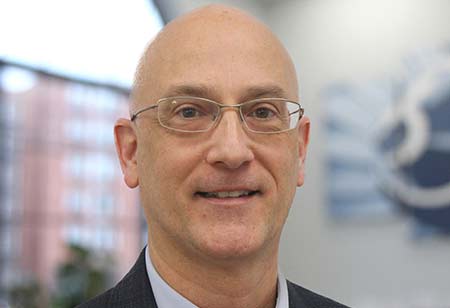
Before joining Alpine, Raley was appointed at TTI, a Berkshire Hathaway Company, where he led its Military and Aerospace Business Unit as Vice President, shepherding the $460 million segment through remarkable revenue and market share growth Roger Raley has named as President by Alpine Advanced Materials. Raley, an international executive with experience in the defense and commercial aerospace markets, takes the helm at Alpine as the company experiences growth driven by burgeoning demand for HX5, its military aviation-grade thermoplastic nanocomposite. Before joining Alpine, Raley was appointed at TTI, a Berkshire Hathaway Company, where he led its Military and Aerospace Business Unit as Vice President, shepherding the $460 million segment through remarkable revenue and market share growth. With over two decades of experience helping deliver solutions that improve complex defense and commercial global supply chains, Raley is well-suited to the new role at Alpine. "Every day, the commercial space, aerospace, and defense companies we're working with seem to find new ways they can use HX5 to save fuel and reduce carbon emissions with lightweight and strong components," stated Joe D'Cruz, Executive Chairman of Alpine Advanced Materials . "Roger is the perfect fit to assume the lead, ensuring these superior custom-engineered parts find their way into the right global supply chains." Holding the exclusive global license to HX5, which was developed by Lockheed Martin Skunk Works, Alpine works with companies to design and manufacture lighter and stronger components. Engineered to replace machined aerospace-grade aluminum at half the weight, HX5 represents over a decade of testing and validation with an R&D investment of more than $50 million. In multiples test, it has repeatedly demonstrated the capability of withstanding the most demanding applications, and is certified for utilizing in high-speed helicopters, jet fighters, rockets, satellites, unmanned aerial vehicles, and amphibious transport vehicles. ...Read more
ABL has also begun testing an integrated RS1 upper stage with an E2 engine. E2 was developed in house and will power both the first and second stages of RS1. Small satellite manufacturing company ABL Space Systems was awarded two U.S. Department of Defense (DoD) contracts and completed a massive round of funding with a combined value of USD 90 million. The two contracts and the investment round are vital to the company's rapid development of the RS1 launch vehicle and GS0 deployable launch system, with a demonstration launch scheduled for the first quarter of 2021. The DoD contracts were awarded by the Air Force Research Laboratory and AFWERX, with participation from the Air Force Space and Missile Systems Center, for a combined total of USD 44.5 million, spread over three years. In addition, the company secured USD 49 million of financing led by Ethan Batraski at Venrock with participation from New Science Ventures, Lynett Capital, and Lockheed Martin Ventures. The recent investment round was closed on March 31st and will fully fund the company for three launch demonstration campaigns in 2021. "We've completed hundreds of engine, stage, and ground system tests across multiple deployments to unimproved sites. All were performed on generator power with fully self-sufficient systems," said Dan Piemont, ABL founder, and CFO. "From the beginning, we've focused on developing tactically responsive launch CONOPS alongside our technology. The result is a large capacity, fit-for-purpose resilient launch system. I am excited to deliver value to our customers in the United States Government and our commercial customers across the U.S. and the globe with this technology." ABL has also begun testing an integrated RS1 upper stage with an E2 engine. E2 was developed in house and will power both the first and second stages of RS1. Tests are being conducted at the Edwards Air Force Base under a CRADA with the AFRL Rocket Propulsion Division entitled 'Testing of Additive Manufactured Liquid Rocket Components and Engines in a Rapidly Deployable Architecture for Future Responsive Launch Operations.' This enables the company's use of the Area 1-56 test site. "AFRL was an early supporter and remains a key, trusted partner," said Harry O'Hanley, founder and CEO of ABL. "The AFRL team at Edwards Air Force Base is forward thinking and understands how to work with non-traditional contractors to rapidly innovate. Together, we're developing critical technology to meet the needs of the next generation warfighter and serve the burgeoning commercial space market." ...Read more

Featured Vendors