THANK YOU FOR SUBSCRIBING

Aerospace and Defense Review Weekly Brief
Be first to read the latest tech news, Industry Leader's Insights, and CIO interviews of medium and large enterprises exclusively from Aerospace and Defense Review
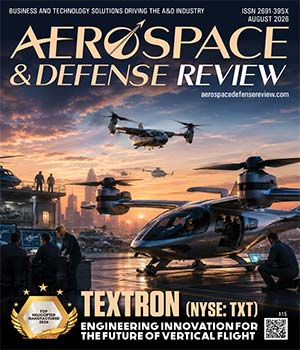
![Textron [NYSE: TXT]: Engineering Innovation For The Future of Vertical Flight](https://www.aerospacedefensereview.com/newstransfer/upload/26-iygg1.jpg "Textron [NYSE: TXT]: Engineering Innovation For The Future of Vertical Flight")
The true test of vertical-lift aviation is not found in a design studio or on a production line. It is seen every time an aircraft performs in demanding conditions where reliability, precision and safety leave little room for error. Through Bell, its vertical-lift business, Textron [NYSE: TXT] has spent decades developing rotorcraft shaped not only by engineering expertise but also by the real-world demands of the people who fly and rely on them every day. From emergency medical transport and commercial aviation to defense operations, Bell's helicopters have earned the trust of operators across a wide range of missions. As aviation continues to evolve, the company is building on that experience to develop the next generation of vertical-lift aircraft for an increasingly complex operating environment. For more than 90 years, Bell has helped define what operators expect from vertical-lift aviation. Supported by Textron's expertise across aerospace and manufacturing, the company designs and builds aircraft for the realities of everyday operations. Its platforms support everything from defense and public safety to commercial aviation, earning the confidence of operators through dependable performance, durability and a strong focus on safety. That reputation continues to make Bell a trusted choice for customers around the world. Advancing the Future of Vertical Flight Each mission presents a different set of challenges; for example, search and rescue missions require aircraft that are fast and able to cope with adverse environments, whereas emergency missions require a fast response with a high level of reliability. Military missions require high precision and versatility, and commercial operators require reliability in the day-to-day operation of the aircraft. Bell designs its aircraft around the practical needs of its customers in order to help them perform a multitude of missions. Versatility is one of the characteristics of Bell's aircraft. Bell 505, Bell 407 and Bell 429 helicopters are versatile and are capable of performing different tasks, including private transportation, emergency medical services, law enforcement, offshore energy and utilities missions. Bell 525 is the new generation super-medium helicopter from Bell, which will increase the spectrum of tasks.
Aviation
Operational failure in modern defense rarely comes from a single breakdown. Instead, it emerges from disconnected workflows, fragmented systems and inconsistent information management. As NATO pushes toward interoperability and integrated digital operations during missions, fragmentation has become a readiness risk. Comply365 operates as a connected operational ecosystem rather than a collection of disconnected software modules. It connects operational content management, safety oversight and training governance through the Comply365 Operational Performance Platform to improve information continuity and readiness visibility across distributed operations. Its capabilities were shaped within commercial aviation environments where operational consistency, safety governance and controlled documentation are critical to managing highconsequence operations. The same operational disciplines now support defense organizations managing coalition missions, dispersed fleets and constrained manpower environments. Comply365’s approach aligns closely with NATO’s digital transformation strategy and the UK Ministry of Defense’s longstanding push for a secure digital backbone and reusable digital services that strengthen operational coordination.
A&D Manufacturing

Military programs operate under immense pressure. Equipment must perform in extreme conditions, schedules often leave little room for delay, and mission success depends on technologies that work exactly as intended when deployed. Customers who face these demands need more than a supplier. They need a partner that understands operational realities, adapts to changing requirements, and remains accountable throughout the life of a program. Advanced Conversion Technology (ACT) has built its business around that principle, placing the voice of the customer at the center of every decision from technology development through production and long-term support. What enables that responsiveness is ACT’s vertically integrated model, which brings engineering, manufacturing, testing, and qualification together under one roof. Direct collaboration across teams allows ACT to maintain visibility, accelerate decision-making, and adapt quickly as program requirements evolve. That agility is reinforced by a culture built on customer relationships that shape how ACT approaches innovation, product development, and future planning. Since the company became 100 percent employee-owned in 2021, that commitment has grown even stronger. “We partner with our customers to deliver mission-ready solutions that perform and protect in defense applications on land, in the air, or at sea,” says Andy Domovich, president. Customer Needs Shape Every Stage of Development ACT’s approach to partnership shapes product development. Military customers need greater power output, improved efficiency, and smaller form factors without compromising performance in demanding operational environments. ACT addresses those requirements through a combination of extensive fielded experience, a deep design library, and a continued investment in advanced technologies. Modern semiconductors, advanced magnetic materials, and sophisticated power converter topologies further help increase power density and efficiency while maintaining the rugged reliability required for defense applications.
A&D Training & Simulation
Military aviation training environments demand more than technical instruction alone. Pilots and aircrew members must make rapid decisions under pressure while managing communication, coordination and mission execution in situations where mistakes can carry severe consequences. CTI Flight Training built its philosophy around preparing personnel for those realities through instruction rooted in aviation experience and disciplined debrief methodology. “Every day is a high stakes day,” says Patrich M. Skendziel, managing director. The company’s instructor base includes a large percentage of former military aviators and operators serving across leadership, headquarters staff and on-site training teams. CTI believes that background creates stronger credibility in the classroom and allows training scenarios to reflect the realities warfighters encounter during missions. Its approach centers heavily on Crew Resource Management training, which formed the foundation of the company when it was established. CTI structured its programs around the belief that communication, situational awareness and disciplined decision-making are critical across airborne activities, ground operations and regulatory environments. The company also emphasizes “controlling the controllable.” According to CTI, maintaining discipline around manageable factors reduces the impact of unexpected events during flight operations and training activities alike.

A&D Manufacturing

New Tools Enable Am to Create Differentiating Aerospace Products That Make the World Better
Melissa Orme, Vice President, Boeing
A&D Suppliers & Distributors

Driving the Future of Manufacturing With AI and Digital Transformation
Andy Mears, Manufacturing Engineering, Sr. Manager - Operations Transformation & Intelligent Factory, Lockheed Martin
Avionics
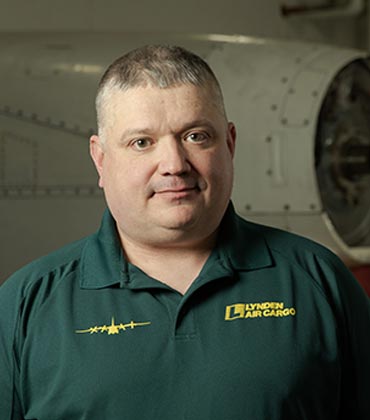
Charting the Future: Strategic Insights For Hercules Avionics Upgrade
Milton Beaver, Director of Maintenance, Lynden Air Cargo
Aviation

Designing Consistency in a Complex Aviation Network
David LaFay, Vice President, Quality, PrimeFlight Aviation Services
Military Contract Manufacturing

Keys to Military Housing Success
Dexter Wong, Investment Manager, Military Housing, The Michaels Organization

IN MY OPINION
Defense Tech
What Defense Tech Startups Miss In Their Fundraising Pitch
Andy Tang, Partner, Draper Associates
LAST WORD
Aviation
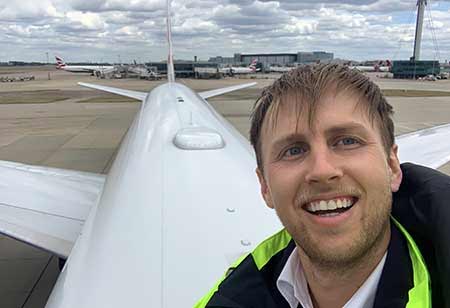
Bridging the Digital Gap in Aviation Sustainability
Andrew Ibsen, Duty Maintenance Manager, British Airways
IN FOCUS
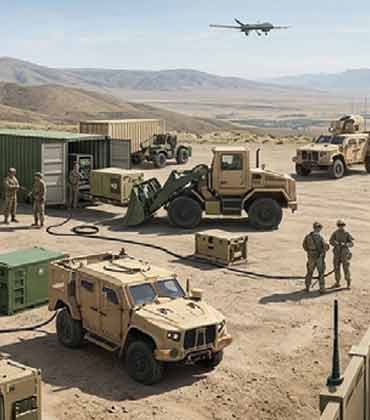
Engineering Resilience: Advancements in Military Power Technology
Military power supplies manufacturers deliver advanced, reliable energy systems supporting defense modernization, operational readiness, cybersecurity, and mission-critical technologies.
EDITORIAL
Engineering the Future of Mission-Critical Aviation
Aviation and defense are evolving rapidly as operators balance mission readiness, safety and operational efficiency with accelerating technological change. Success increasingly depends on organizations that pair engineering excellence with practical innovation, delivering solutions that improve reliability while preparing customers for future operational demands. In this edition of Aerospace and Defense Review, we recognize the companies and industry leaders advancing aerospace through technology, expertise and execution.
At the center of this issue, Textron (NYSE: TXT) is recognized as the Top Helicopter Manufacturer 2026. Through its Bell business, the company continues to advance vertical flight with mission-ready rotorcraft that combine engineering innovation, operational versatility and comprehensive lifecycle support for commercial and defense customers.
This edition also showcases organizations strengthening critical areas of the aviation ecosystem. Shrike Aero, recognized as the Top Magneto and Piston Engine Accessory Repair Solutions 2026, helps operators minimize downtime through rapid, high-quality repair services. Comply365, our Aviation Training, Operations & Safety Solutions of the Year 2026, is enabling more connected and intelligent operations by integrating training, safety and operational information. Advanced Conversion Technology, recognized as the Top Military Power Supplies Manufacturer 2026, delivers rugged power solutions designed to meet demanding defense requirements.
This issue also features insights from industry leaders. Andy Tang, Partner at Draper Associates, discusses why dual-use technologies are becoming increasingly important for defense startups seeking investment and long-term growth. Andrew Ibsen, Duty Maintenance Manager at British Airways, explores how digital tools and integrated data are helping modernize aircraft maintenance while supporting safer, more efficient operations.
Together, the organizations and leaders featured in this edition demonstrate that the future of aerospace will be shaped by engineering excellence, digital innovation and a commitment to mission success. We invite you to explore the insights shared throughout this issue.
