

“Every day is a high stakes day,” says Patrich M. Skendziel, managing director.
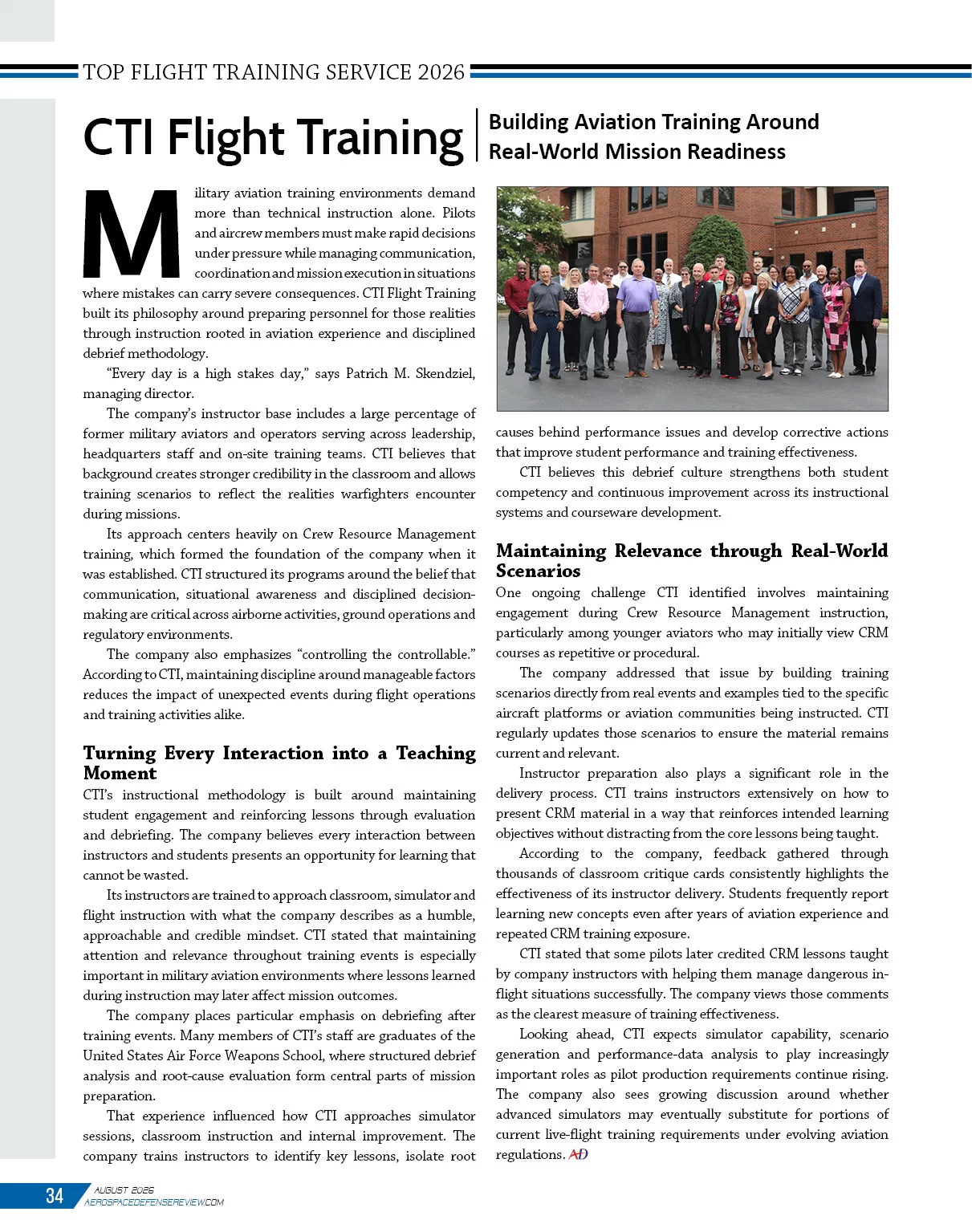
The company’s instructor base includes a large percentage of former military aviators and operators serving across leadership, headquarters staff and on-site training teams. CTI believes that background creates stronger credibility in the classroom and allows training scenarios to reflect the realities warfighters encounter during missions.
 Its approach centers heavily on Crew Resource Management training, which formed the foundation of the company when it was established. CTI structured its programs around the belief that communication, situational awareness and disciplined decision-making are critical across airborne activities, ground operations and regulatory environments.
The company also emphasizes “controlling the controllable.” According to CTI, maintaining discipline around manageable factors reduces the impact of unexpected events during flight operations and training activities alike.
Turning Every Interaction into a Teaching Moment
CTI’s instructional methodology is built around maintaining student engagement and reinforcing lessons through evaluation and debriefing. The company believes every interaction between instructors and students presents an opportunity for learning that cannot be wasted.
Its instructors are trained to approach classroom, simulator and flight instruction with what the company describes as a humble, approachable and credible mindset. CTI stated that maintaining attention and relevance throughout training events is especially important in military aviation environments where lessons learned during instruction may later affect mission outcomes.
-
Every day is a high stakes day.
That experience influenced how CTI approaches simulator sessions, classroom instruction and internal improvement. The company trains instructors to identify key lessons, isolate root causes behind performance issues and develop corrective actions that improve student performance and training effectiveness.
CTI believes this debrief culture strengthens both student competency and continuous improvement across its instructional systems and courseware development.
Maintaining Relevance through Real-World Scenarios
One ongoing challenge CTI identified involves maintaining engagement during Crew Resource Management instruction, particularly among younger aviators who may initially view CRM courses as repetitive or procedural.
The company addressed that issue by building training scenarios directly from real events and examples tied to the specific aircraft platforms or aviation communities being instructed. CTI regularly updates those scenarios to ensure the material remains current and relevant.
Instructor preparation also plays a significant role in the delivery process. CTI trains instructors extensively on how to present CRM material in a way that reinforces intended learning objectives without distracting from the core lessons being taught.
According to the company, feedback gathered through thousands of classroom critique cards consistently highlights the effectiveness of its instructor delivery. Students frequently report learning new concepts even after years of aviation experience and repeated CRM training exposure.
CTI stated that some pilots later credited CRM lessons taught by company instructors with helping them manage dangerous in-flight situations successfully. The company views those comments as the clearest measure of training effectiveness.
Looking ahead, CTI expects simulator capability, scenario generation and performance-data analysis to play increasingly important roles as pilot production requirements continue rising. The company also sees growing discussion around whether advanced simulators may eventually substitute for portions of current live-flight training requirements under evolving aviation regulations.
Flight Training Services Info
What Should Organizations Understand About Flight Training Services?
Flight Training Services prepare pilots and aviation personnel to handle technical procedures, communication demands and decision-making situations encountered during operations. Effective programs combine classroom learning, practical exercises, instructor guidance and performance feedback to strengthen skills such as situational awareness, crew coordination and response management. These services help organizations develop personnel who can apply aviation knowledge in realistic environments rather than only understand theoretical concepts.
How Does CTI Flight Training Approach Aviation Learning And Crew Development?
CTI Flight Training delivers Flight Training Services focused on Crew Resource Management, human factors and operational decision-making. The company uses experienced aviation instructors who bring practical knowledge into training environments, helping participants understand communication, teamwork and risk management principles. Its training approach includes interactive learning, scenario-based exercises and structured debriefing sessions that allow participants to review performance, identify improvement areas and apply lessons to future operations.
Why Are Scenario-Based Methods Important In Flight Training Services?
Scenario-based methods allow aviation professionals to practice responses in controlled environments before facing similar situations during real missions. Flight Training Services that incorporate realistic scenarios help bridge the gap between technical knowledge and operational application. These methods allow participants to evaluate decisions, improve communication and strengthen teamwork while managing changing conditions. CTI Flight Training incorporates practical examples and aviation-focused scenarios to create learning experiences that reflect actual operational challenges.
How Do Organizations Evaluate The Quality Of Flight Training Services?
Organizations evaluating Flight Training Services should consider instructor expertise, training methodology, customization options and methods used to measure learning outcomes. A strong program should provide more than course delivery by showing how participants develop practical skills through exercises, feedback and performance reviews. Factors such as aviation experience, training relevance and the ability to adapt programs to specific requirements can help organizations select a provider that aligns with their operational goals.
How Are Flight Training Services Changing With New Aviation Requirements?
Flight Training Services are evolving as aviation organizations adopt more simulation-based learning, advanced training methods and performance-focused evaluation approaches. Modern programs increasingly emphasize how personnel apply knowledge during realistic situations rather than focusing only on completing training hours. Improvements in simulation technology, data analysis and customized instruction are helping providers create more effective learning environments that support changing aviation requirements.
What Role Does Instructor Experience Play In Flight Training Services?
Instructor experience is an important factor in delivering effective Flight Training Services because experienced trainers can connect technical concepts with real aviation situations. CTI Flight Training uses aviation professionals who bring operational insight into training sessions, helping participants understand the practical impact of communication, coordination and decision-making. Experienced instructors also provide meaningful feedback during discussions and debriefs, allowing learners to strengthen their skills and improve performance in future aviation scenarios.
| Share this Article: |
Company
CTI Flight Training
Management
Patrich M. Skendziel, Managing Director
Description
CTI Flight Training provides aviation and Crew Resource Management training services for military and defense environments. The company combines experienced military instructors, scenario-based instruction and structured debrief methodologies to help aircrew members improve mission readiness, decision-making and operational flight performance.