
Aerial firefighting equipment has to justify more than its performance on a specification sheet. Aircraft operators are committing capital before contract revenue is certain, while certification schedules can delay when an aircraft begins bringing in revenue. Procurement turns on how quickly a system can move from integration through approval without creating avoidable aircraft modifications.
Top Aerial Firefighting Equipment Systems 2026
Aerial firefighting equipment systems help emergency response teams combat wildfires through aircraft-mounted fire suppression technologies. With a focus on retardant delivery, equipment reliability, deployment efficiency and flight safety, they support more effective aerial firefighting and improved wildfire response capabilities.
Solutions
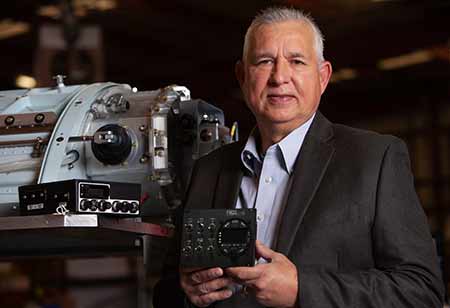
Trotter Controls
Where Control Engineering Meets Aerial Firefighting
Victor D. Trotter, President and CTO
In aerial firefighting, releasing a large volume of retardant is only one part of the mission. Controlling how that payload is delivered during flight helps ensure consistent coverage over the target area.
Deep Dive
Aerial Firefighting Equipment Systems Info
Q1
What Equipment Do Aerial Firefighting Systems Include?
Top Aerial Firefighting Equipment Systems encompass the aircraft-mounted equipment used to carry, control and release water, retardant or other fire-suppression materials during wildfire operations. These systems can include tanks or hoppers, gates, pumps, actuators, flow-control mechanisms, cockpit interfaces and supporting electronics. Their purpose is to help crews deliver a planned quantity of suppressant across a target area while accounting for aircraft movement, payload limits and changing conditions during flight.
Q2
Why Is Demand for Aerial Firefighting Equipment Growing?
Demand for Top Aerial Firefighting Equipment Systems is shaped by the growing operational pressure on firefighting agencies to reach remote or fast-moving fires and coordinate aircraft across large response areas. Operators need equipment that makes each sortie count, supports consistent drops and can be maintained between missions. Aircraft availability, seasonal fire activity, fleet modernization and the need to adapt equipment to different airframes all influence investment decisions, alongside the cost of operating and certifying specialized aircraft.
Q3
Which Organization Did Aerospace Defense Review Recognize for Top Aerial Firefighting Equipment Systems in 2026?
Aerospace Defense Review recognized Trotter Controls as its Aerial Firefighting Equipment System of the Year 2026. The Fort Worth-based engineering company develops aircraft fire-gate and control systems, building on work that began with the Air Tractor AT802F program. Its portfolio includes constant-flow retardant delivery, successive fire-gate systems and equipment supplied for multiple aircraft platforms, placing its work directly within Top Aerial Firefighting Equipment Systems.
Q4
What Should Operators Evaluate When Selecting Aerial Firefighting Equipment Systems?
Selecting Top Aerial Firefighting Equipment Systems requires more than comparing tank capacity or discharge speed. Operators should assess payload impact, aircraft compatibility, certification requirements, installation complexity and maintenance needs. Control accuracy matters because inconsistent flow can affect coverage across a drop. Decision-makers should also examine fail-safe provisions, manual overrides, parts availability, technician support and the system’s ability to provide useful mission records without adding avoidable weight or operational burden.
Q5
How Are Control Technology and Telemetry Changing Aerial Firefighting Equipment?
Innovation in Top Aerial Firefighting Equipment Systems increasingly involves coordinated mechanical, electrical and software design. Flow-control technology can adjust discharge as tank levels and flight conditions change, while telemetry can record drop locations and operational data for later review. Electric actuation may reduce hydraulic components and simplify some installations, but the right architecture depends on the aircraft and mission. Reliability, certification readiness, operator control and maintainability remain central measures of technical value.
Q6
What Capabilities Support Trotter Controls’ Recognition for Aerial Firefighting Equipment Systems?
Trotter Controls’ category relevance is reflected in several documented capabilities: its constant-flow control adjusts gate position to account for changing tank levels and flight conditions; its FRDS GEN III uses an all-electric fire-gate architecture; and its DataVault platform records georeferenced drop activity and aircraft data. The company also supports certification and integration across several airframes. Together, these capabilities span suppressant delivery, aircraft equipment and mission visibility within Top Aerial Firefighting Equipment Systems.
