

The next advantage in warfare won't come from making a single decision faster. It will come from a command's ability to continuously anticipate, test, execute and adapt—faster than the adversary can respond.
The platform brings together information scattered across multiple locations, formats and systems. It connects the systems a command already uses and strengthens existing programs of record, enabling them to function together as a unified command environment.
Yet much of military planning remains disconnected from the operations it is intended to direct. Plans move through sequential cycles of development, coordination, approval and execution, often becoming outdated as conditions change. Closing that gap is one of the most consequential opportunities in modern command and control.
Onebrief is transforming how military commands operate by making a continuous command decision cycle possible. The Onebrief platform unifies operational data, collaborative planning, agentic AI and simulation in one connected environment. Staff can develop and refine courses of action, test alternatives before execution, generate orders, and maintain shared operational understanding as plans evolve.
 By connecting planning with execution systems and feeding operational assessments back into the next planning cycle, Onebrief helps close a longstanding gap in military command. The result is more than faster planning; it's a shift toward sustained initiative, enabling commanders to maintain initiative, respond to change, and turn intent into coordinated action at operational speed.
“Faster, better decisions multiply combat power. Decision dominance comes from sustaining that edge through continuous planning, execution, and adaptation,” says Grant Demaree, cofounder and CEO.
Connecting Planning Across the Mission
Founded by military veterans, Onebrief draws on its leadership team’s decades of Army and Navy experience, much of it in operational commands. Inspired by having watched talented staff lose days to inadequate planning tools, they developed the platform they wished was available during their service.
We keep driving down the time from a commander’s intent to a usable decision because that number is the whole game.
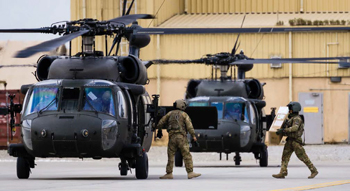 Most staffs, Demaree says, stitch together tools that were never meant to work together. Onebrief gives them one live plan instead. When it changes, everyone from tactical units to the interagency, allies and mission partners involved in planning sees the update immediately. The Joint Staff, combatant commands and service components already use Onebrief on the secure networks where operations actually run.
“We’re proud to build for the commands and staffs entrusted with some of the military’s most demanding missions, and we remain committed to earning their trust every day,” says Demaree.
AI that Expands Human Capability without Replacing Judgment
The value of AI to a military command isn’t simply answering questions. It's AI that understands the operational environment, helps develop and test courses of action, and turns commander's intent into coordinated planning products and action, all while keeping people in command.
 Onebrief brings agentic AI directly into the collaboration and planning environment, enabling staff to move seamlessly from analysis to action. Users can ask questions across their plans and authoritative references, generate products and other planning artifacts, and update operational information through natural-language instructions. Increasingly sophisticated AI orchestration connects these activities into coordinated workflows, reducing the manual effort between understanding a problem and acting on it.
This shift fundamentally changes how staff operate. Rather than spending hours searching for information, assembling products, and synchronizing changes across disparate tools, planners can focus on evaluating alternatives, challenging assumptions, and exercising operational judgment. Combined with simulation and wargaming, AI helps commands explore more options, understand potential consequences, and refine plans before execution.
“The real power of AI isn't replacing military judgment. It's multiplying what commanders and staffs can accomplish, giving them more options, better insight and more time to make the decisions that matter,” says Demaree.
Human command remains fundamental. Onebrief AI grounds its responses in operational data and authoritative references, provides visibility into its sources and actions, and operates within established permissions. Commanders and staff can evaluate recommendations, review AI-generated changes, and retain responsibility for operational decisions. The result is not autonomous command, but a more capable, adaptive command team.
Built for Networks where Decisions Happen
Onebrief’s platform runs on classified networks and has the government’s highest authorization levels for handling sensitive information, including IL5, IL6 and top secret. Its security process includes authenticated vulnerability scanning, static and dynamic application security testing, independent cybersecurity review, and formal authorization from the officials accountable for those decisions.
-
Faster, better decisions multiply combat power. Decision dominance comes from sustaining that edge through continuous planning, execution, and adaptation.
The platform deploys through Second Front, a software deployment company that helps bring modern software onto classified government networks. It also works in expeditionary and low-bandwidth environments, keeping planning information accurate and available despite limited connectivity.
Onebrief treated security and resilience as core requirements from day one and built the rest of the platform to meet them.
Measuring the Value of Faster Decisions
Onebrief measures its impact through decision speed, decision quality and staff efficiency. Some users reported that planning cycle times have fallen by as much as 90 percent, and planning teams get back about 20 hours a week they used to lose to rework. They also reported about a 50 percent improvement in the accuracy of the information they use to build plans.
 In one instance, a 10-day exercise with Onebrief freed about 500 hours of staff time. In another, a task that once took five hours fell to less than one. Reducing the time spent on tasks like assembling slide presentations gives staff more time to apply judgment and assess changes that static planning might miss. The recovered capacity matters beyond efficiency, giving staff more time to assess changing conditions, challenge assumptions, and refine plans before decisions become actions.
As adversaries move quickly on AI, decision advantage increasingly comes down to who can assess, plan and act faster. Building new military platforms can take years and billions of dollars to build. Onebrief’s proven platform helps the existing force improve its effectiveness. Distributed, software-enabled command allows planning and coordination to extend across different headquarters and operational levels without concentrating all planning tasks in one location.
Onebrief is expanding its platform into more networks, services and government environments. It intends to extend these capabilities without changing the principle that leaders remain responsible for decisions at every level.
“We keep driving down the time from a commander’s intent to a usable decision because that number is the whole game,” says Demaree.
Onebrief earned recognition as the Top Military Planning and Command Software 2026 for the measurable gains its approach brings to military planning, including shorter planning cycles, improved information accuracy and significant time savings.
When Planning Speed Becomes Command Advantage
Military planning software is bought against a simple but unforgiving constraint. A plan can be analytically sound and still lose value if staff sections spend hours reconciling versions before a commander sees it. The buying decision therefore turns less on feature breadth than on whether a platform shortens the path from changing information to a usable decision without weakening command judgment.
Planning speed depends heavily on how the system handles shared work. Traditional staff processes often split planning across separate files and tools, forcing repeated briefings and handoffs before the pieces can be reconciled. A credible platform should let multiple sections work against the same current plan while changes remain visible across the staff. Buyers should examine whether collaboration is truly concurrent or merely a shared repository layered over the same sequential workflow. Version control, update latency, handoff burden and the effort required to reconcile changes matter because each can extend the planning cycle even when the software appears modern.
Data currency is equally important. Military staffs draw from established systems that cannot simply be discarded, and planning tools must work around classification boundaries and existing programs of record. Integration should therefore be judged by how well the software keeps planning information synchronized while connecting to systems already in use. Static exports may move data between applications, but they can also create stale copies that drift from the underlying situation. The practical standard is whether the planning environment remains current enough for commanders to understand what changed and why before approving a course of action.
“Onebrief Connects With Existing Command Systems Instead Of Requiring Their Replacement, While Its Ai Can Draft And Analyze Planning Work Without Transferring Final Authority From The Commander And Staff.”
AI introduces a different procurement risk. Drafting and analysis can compress staff workload, but military users still need to understand how a recommendation was produced and retain authority over the decision. Buyers should look for human control at the point where AI-generated work influences judgment. The useful distinction is not whether a platform includes AI, but where automation stops. Staff members also need visible evidence they can challenge before output shapes the plan. Systems that accelerate routine work while keeping accountability with people are easier to trust in command settings.
Deployment conditions can overturn an otherwise strong evaluation. Software that performs well on commercial infrastructure has limited value if it cannot run on classified networks or remain usable when bandwidth drops. Authorization status, cybersecurity testing, deployment pathway and performance under constrained connectivity deserve the same scrutiny as workflow design. Procurement teams should also examine how the platform is fielded and updated across secure environments. A faster planning process only matters when the software is available where command decisions are actually made.
Onebrief gives staff a shared live plan where sections can work in parallel rather than waiting on serial handoffs. It connects with existing command systems instead of requiring their replacement, while its AI can draft and analyze planning work without transferring final authority from the commander and staff. It also operates on classified networks and is built for low-bandwidth environments, addressing the deployment constraints that often separate usable defense software from attractive demonstrations.
The platform is fielded through Second Front, its deployment partner, supporting access to classified environments. For buyers prioritizing shorter planning cycles, current information, secure deployment and retained human control, Onebrief merits consideration as a military planning and command platform.
...Read more
| Share this Article: |
Company
Onebrief
Management
Grant Demaree, Co-Founder and CEO
Description
Onebrief is a cloud-native command decision platform used by military organizations, bringing operational data, collaborative planning, agentic AI and continuous wargaming into one environment. It helps staffs maintain a shared operational picture, accelerate planning, and decide faster on secure networks.