

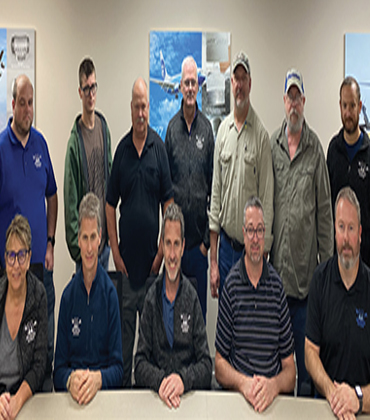
 Tim Gellerson, CEO
Through manufacturing, engineering, product-line authority, and specialized technical expertise, the company helps customers maintain access to critical hardware when replacement parts are expensive, difficult to source, or no longer available.
For aircraft operators and defense organizations, these challenges can have consequences far beyond the maintenance problem itself. A missing component can delay an aircraft’s return to service or complicate the long-term support of an established fleet. MAA brings manufacturing and sustainment together to help customers manage both immediate component requirements and the longer-term demands of keeping aircraft and systems operational. The company’s work spans commercial aviation, military aircraft, and specialized aerospace and defense systems.
Below is an interview we had with Tim Gellerson, CEO of Mid-America Aerotech (MAA).
Mid-America Aerotech supports military, aerospace, commercial aviation, and private aircraft operators. How do you approach delivering repair, maintenance, and engineering solutions across such diverse customer requirements and operational environments?
We start by understanding the customer’s and aircraft’s operating environments and the consequences of downtime. A commercial operator may be focused on turnaround time and aircraft availability, while a military customer may be focused on mission readiness and long-term fleet sustainment. Our strength is that we can bring a complete range of capabilities, including hydraulics, pneumatics, electromechanical repair, machining, NDT, and cold spray, to the table and tailor the solution to the platform. Many of the aircraft and systems we support have long service lives, so our job is to help customers maintain compliance, extend component life, and keep their operations moving with as little disruption as possible.
As an FAA Part 145/EASA/UK-certified repair station with AS9100 certification, what role do your quality standards and regulatory expertise play in ensuring safety, reliability, and mission readiness for your customers?
Quality is the foundation of everything we do. In aerospace, a repaired component has to be right every time because safety, reliability, and mission readiness depend on it. Our AS9100D and AS9110C certifications, along with our FAA Part 145, EASA, and UK 145 repair station approvals, give customers confidence that our processes are disciplined, traceable, and built around regulatory compliance. Whether we are supporting a commercial helicopter, a military aircraft, or a naval survivability system, those standards help ensure that the work we deliver performs consistently in demanding real-world conditions.
Your team specializes in legacy aircraft hardware, including flight control valves, landing gear actuators, and servo cylinders. What are some of the biggest challenges associated with maintaining and extending the lifespan of aging aircraft components?
Legacy aircraft create a very specific set of challenges. The fleets are still active, but parts can be difficult to source, drawings may be limited, lead times can be long, and components are often affected by age-related wear, corrosion, or damage. In many cases, replacing a part is not the most practical or cost-effective answer. MAA helps bridge that gap by developing repair approaches that restore serviceability and preserve airworthiness. Our experience supporting critical hardware on platforms such as commercial aircraft and the B-2, B-52, C-130, P-3, U-2, and others gives us a practical understanding of how important sustainment is to both commercial and military readiness, as well as lifecycle cost control.
Mid-America Aerotech has invested heavily in additive manufacturing through cold spray technology. How is this technology transforming aircraft component repair, and what advantages does it provide compared with traditional repair methods?
Cold spray is an exciting technology because it gives us another way to save high-value aerospace hardware that might otherwise be scrapped. It allows us to restore damaged, worn, or corroded surfaces without introducing the same level of thermal stress associated with some traditional repair methods. That is especially important for materials like magnesium and aluminum, where preserving the integrity of the base material matters. For customers, the benefit is straightforward: shorter lead times, lower replacement costs, and a way to return hard-to-source components to service safely. It also allows us to develop custom repair procedures and support FAA certification efforts for repairs that can make a real operational difference.
Can you discuss your capabilities across hydraulics, pneumatics, machining, and electromechanical systems? How do these integrated capabilities help customers streamline their maintenance and repair requirements?
One of the advantages we offer customers is the ability to bring several complementary capabilities together under one roof. We support the complete production and repair of hydraulic and pneumatic systems and electromechanical components, as well as precision machining, non-destructive testing, and advanced repair technologies such as cold spray. That integrated approach helps customers avoid managing multiple suppliers for related work and gives us a more complete understanding of the line-replaceable unit (LRU) or component and its operating requirements. With the addition of the Moog pneumatic portfolio, we also gain expanded manufacturing, overhaul, testing, tooling, and certification capabilities for emergency flotation, naval decoy, inflator, and related systems. The result is a more responsive and efficient cradle-to-grave support model for customers.
The aerospace industry continues to face challenges such as supply chain disruptions, parts availability, and increasing maintenance costs. How is Mid-America Aerotech helping customers overcome these challenges?
We help customers by focusing on practical alternatives to long lead times and costly replacement parts. When a component can be repaired safely and reliably, we look for ways to return it to service instead of forcing the customer into a replacement cycle. Our additive repair capability is part of that solution, but so is our willingness to secure intellectual property, tooling, inventory, and test equipment for important product lines. Owning that authority allows us to respond faster, control more of the process, support product improvements, and give customers greater continuity of supply. In an industry where delays can have a major operational impact, that responsiveness matters.
With experience serving both military and commercial aviation markets, how do the needs and expectations of these sectors differ, and how has MAA developed solutions to meet each market’s unique demands?
-
Our experience with legacy hardware, combined with its manufacturing and engineering capabilities, gives us a role in supporting platforms that may remain in service long after their original components become difficult to obtain.
With experience serving both military and commercial aviation markets, how do the needs and expectations of these sectors differ, and how has MAA developed solutions to meet each market’s unique demands?
Military and commercial customers share many of the same expectations, including quality, reliability, responsiveness, and cost control, but they often prioritize them differently. Military customers are frequently focused on mission readiness, legacy fleet sustainment, survivability systems, and the long-term availability of required hardware. Commercial operators tend to place greater emphasis on aircraft availability, predictable turnaround times, and minimizing total maintenance costs. MAA has developed solutions for both markets by combining disciplined repair station processes with platform manufacturing knowledge, aftermarket overhaul experience, and engineering support that can be adapted to each customer’s mission and operating requirements.
Your engineering and manufacturing capabilities allow you to support build-to-print projects and customized component solutions. How does your team collaborate with customers to develop precise, reliable, and cost-effective outcomes?
Our collaboration usually begins with a clear understanding of the aircraft’s technical requirements and the customer’s business objectives. Sometimes the need is a build-to-print manufacturing project; other times, it is a repair challenge in which the customer needs a reliable alternative to replacement. We bring engineering, design, manufacturing, inspection, machining, and repair expertise together to identify the most practical path forward. Access to drawings, bills of materials, repair documentation, specialized tooling, and test equipment strengthens that process and helps us deliver precise, reliable, and cost-effective outcomes.
Looking ahead, what emerging trends or technologies do you believe will shape the future of aerospace repair and component manufacturing, and how is Mid-America Aerotech preparing to remain at the forefront of the industry?
Looking ahead, I believe the industry will continue to be shaped by aging aircraft fleets, constrained parts availability, additive repair technologies, and the need for suppliers that can support the full lifecycle of critical components, from design and manufacturing to repair and overhaul. Customers will increasingly look for partners who can do more than perform standard repairs. They will want companies that understand design authority, manufacturing, overhaul, certification, and long-term sustainment. MAA is preparing for that future by expanding our pneumatic and flotation product lines, continuing to invest in cold spray and advanced additive repair methods, growing our technical workforce, and strengthening our position as a sole-source provider of critical aerospace and defense hardware.
Is there anything more that you would like to add or highlight? Any other interesting insights you would like us to cover in the story that we may have missed in this questionnaire?
One point I would add is the impact this work has beyond the individual customer. MAA is helping maintain specialized aerospace capabilities in North Dakota while supporting platforms that operate around the world. For example, the Moog flotation and pneumatic product opportunity gives us a path to create technical jobs, expand our capabilities in West Fargo, and strengthen our long-term position in the aerospace and defense supply chain. That local economic impact, combined with the global importance of the systems we support, is an important part of our story. We are not only manufacturing and repairing components; we are preserving mission-critical capabilities and building a stronger aerospace future right here in North Dakota.
How to Assess Aircraft Repair for Aging Fleets
Aircraft repair becomes more complicated as fleets age. A component may still be perfectly repairable even when replacement parts are becoming harder to find and lead times are getting longer. Older aircraft can bring another problem when technical records are incomplete or parts support has faded. In those situations, finding a repair shop is only part of the job. Operators also need to know that the component can return to service safely and that the repair will not create another support problem down the line.
Certification and process control matter because a repair is only as useful as the records behind it. Approvals are important, but so are the inspection and repair records created throughout the job. Testing needs the same level of attention, particularly when an older component arrives with corrosion or wear that does not fit a routine overhaul. At that point, engineering judgement becomes important. The repair provider needs to determine whether the hardware can be restored properly or whether replacement is ultimately the safer option.
Turnaround time matters, but getting a repair done quickly does not always make the process better. Delays can build when different parts of the job have to move between suppliers. A hydraulic or pneumatic repair may need machining or nondestructive testing elsewhere, while specialised work can add another handoff. Each one means another schedule to manage and another point where communication or accountability can slip. Keeping related work under one quality system can make the process simpler, as long as the provider has the right capabilities in-house.
Legacy fleets bring their own challenges. Parts can become difficult to source years before an aircraft is ready to retire, leaving operators with expensive replacement decisions or tooling that is no longer readily available. Limited technical data can make matters worse. A repair provider's ability to work with hard-to-source components therefore matters beyond standard overhaul services. Drawings, test equipment and controlled tooling can determine whether a repair can be repeated reliably. Product authority also becomes important when long-term support depends on approved technical changes.
“Mid-America Aerotech uses cold spray to recover damaged or corroded surfaces on hard-to-source hardware while maintaining access to engineering and dedicated test resources for supported product lines.”
Newer repair methods can offer another way to keep serviceable hardware in use. Cold spray, for example, can restore worn or corroded surfaces while avoiding some of the thermal effects associated with conventional repair methods. Its suitability depends on the component, material and certification requirements. The important part is not simply having the technology, but knowing where it can be used and having the engineering and documentation to validate the repair. A repair method earns its place when it can be applied consistently and supported through return to service.
Mid-America Aerotech performs maintenance, repair and overhaul across hydraulic and pneumatic aircraft components, along with electromechanical work and machining. Its FAA Part 145, EASA Part-145 and UK Part-145 approvals, together with AS9100D and AS9110C certifications, provide the compliance framework supporting its commercial and military work. The company also uses cold spray to restore damaged or corroded surfaces on hard-to-source hardware, supported by engineering expertise and dedicated testing resources across its product lines. That combination is particularly useful when legacy components, limited parts availability or multiple repair requirements make a straightforward overhaul less straightforward. For operators managing those challenges, Mid-America Aerotech offers a focused MRO capability built around keeping difficult-to-source hardware in service.
...Read more
| Share this Article: |
Company
Mid-America Aerotech (MAA)
Management
Tim Gellerson, CEO
Description
Mid-America Aerotech provides aircraft repair, maintenance and engineering services for commercial and military aviation. Its capabilities span hydraulics, pneumatics, electromechanical systems, machining, Cold Spray repair, legacy aircraft component sustainment and full-lifecycle support across design, manufacturing, repair, overhaul and certification requirements.
