

 Luís Colus, Executive Director and CEO
He started an engineering company, initially establishing it in an empty room in his home’s garage, and began seeking new customers for the recent venture, drawing on the extensive network he had developed during his 12 years working at the CTA, which at the time was home to Brazil’s Airworthiness Authority.
The early days of LHColus Tecnologia were shaped by persistence, technical knowledge and an understanding of a gap in Brazil’s aircraft modification market. At the time, aircraft operators needed a reliable partner capable of developing modifications and guiding them through approval processes. The company emerged with the objective of providing structured engineering support for operators seeking practical, safe and certifiable solutions.
After years of building expertise through smaller projects, LHColus reached a significant milestone when it was selected by Embraer as a supplier for the “troop seats and litters” program for the KC-390 military cargo aircraft. The opportunity demonstrated the confidence placed in the company’s engineering capabilities and began a period of substantial growth.
Today, LHColus has expanded its capabilities through hundreds of approved projects and thousands of delivered components.
Engineering Before Modification Begins
Aircraft modification is rarely limited to installing a new component or changing an existing configuration. Each modification affects aircraft structure, systems, performance, certification requirements and operational objectives. LHColus works closely with customers from the early stages of defining project requirements, helping identify technical challenges before they become costly obstacles.
The company’s approach focuses on understanding the complete mission requirement before developing solutions. When customers plan to add equipment or new capabilities, LHColus evaluates structural limitations, electrical capacity, certification implications and future fleet requirements. This early engineering involvement allows customers to make informed decisions before committing significant investments.
“LHColus is very used to dealing with customer plans to modify aircraft, and it is usual that we participate since the work scope definition, helping them identify technical bottlenecks that may lead to a more complicated or time-consuming certification process,” says Luís Henrique Médici Colus, CEO.
By combining design expertise with certification knowledge, LHColus seeks solutions that balance weight, cost and performance. The company uses modern design techniques while considering the practical realities of aircraft operation. This philosophy helps ensure that modifications are not only technically possible but also aligned with customer expectations.
Building Reliability Through Integrated Development
A successful aircraft modification requires more than just engineering drawings. It requires a complete development process that connects design, testing, qualification, manufacturing, installation and continued airworthiness documentation.
LHColus has developed a structured qualification process supported by experience from hundreds of approved aircraft modifications. The company’s capabilities include aircraft modification design, kit manufacturing, field installation support, workshop training, technical publications and documentation required for continued operation. That includes also repairs and spare parts to support fleet operation.
Reliability comes from connecting all stages of development. Design, testing, engineering processes, manufacturing, and certification must work together to deliver a mature modification solution.
“Reliability comes from connecting all stages of development. Design, testing, engineering processes, manufacturing and certification must work together since the first minute of the project, to deliver a mature modification solution,” explains Colus.
This integrated approach is supported by LHColus’ certifications and quality systems. The company operates with approvals including an ANAC Production Organization Certificate (COP) and Maintenance Organization Certificate (COM), along with quality system certifications such as ISO 9001:2015.
Solving Complex Mission Requirements
One of LHColus’ recent projects highlights the complexity involved in modern aircraft modification. The integration of the Safran EUROFLIR 410 electro-optical system into the Robinson R66 helicopter required the company to address structural design, vibration, weight and balance, mission-system integration and certification as part of a single engineering effort.
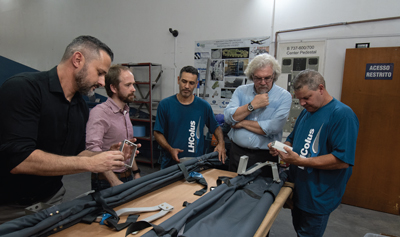 The project was developed for a Robinson R66 configured for police operations and involved integrating a complete airborne mission system. The installation included operator controls and displays, recording and mapping equipment, video distribution, communications and data transmission systems.
The EUROFLIR 410 installation required careful structural planning because the sensor had to be positioned externally to achieve the necessary field of view while maintaining aircraft balance and structural integrity. LHColus developed a removable support structure attached to the helicopter’s existing landing gear structure, creating a dedicated interface for the sensor turret.
The project demonstrated that modification engineering requires attention to both strength and stiffness. For stabilized optical systems, even small structural movements can affect performance. The mounting structure needed to function as a stable platform for precision sensing equipment rather than simply carrying a payload.
Weight distribution was another critical factor. Since mission equipment was installed externally and inside the cabin, LHColus evaluated equipment positioning, aircraft moments and operational requirements throughout development. The company treated weight and balance as a design parameter from the beginning of the project.
From Certification to Production Capability
LHColus’ value proposition extends beyond engineering development. The company manages the complete path from initial design concepts to certified production. Through its engineering and manufacturing capabilities, LHColus can develop modifications, certify them, produce components and support aircraft installation and operation, as well.
For the EUROFLIR 410 program, LHColus led the aircraft modification development and certification process with Brazil’s National Civil Aviation Agency through a Supplemental Type Certificate (STC). The company’s production certification allows it to manufacture approved aeronautical products under its quality system.
-
LHColus is very used to dealing with customer plans to modify aircraft, and it is usual that we participate since the work scope definition, helping them identify technical bottlenecks that may lead to a more complicated or time-consuming certification process.
This combination of engineering, certification and production creates continuity throughout the aircraft modification lifecycle. Customers benefit from a single organization capable of managing design decisions, manufacturing controls, configuration management and product traceability.
The company’s experience is strengthened by professionals with backgrounds in aerospace engineering and aviation certification. Colus himself brings more than four decades of aviation experience, including time working in Brazil’s Airworthiness Certification Office and years leading LHColus.
“Having engineering, manufacturing and quality teams working together allows LHColus to create feasible solutions with controlled costs, optimized weight and improved final product performance,” says Colus.
Supporting Aviation’s Future Needs
As aircraft operators continue adopting new technologies and specialized missions, modification requirements are expected to grow. LHColus anticipates continued demand for installations involving new equipment, satellite antennas, structural attachments and electrical system integration.
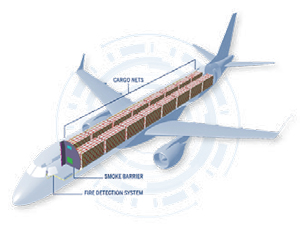 The company also identifies opportunities in cargo conversions and flexible aircraft configurations. Changing market conditions, by the notable increase of e-commerce activities, have increased interest in aircraft that can move between passenger and cargo roles, creating demand for adaptable modification solutions.
Another important milestone in LHColus’ portfolio is the Class F Quick Change Cargo Conversion for the Embraer ERJ family. The project created a flexible configuration that allows aircraft to transition between passenger and cargo operations. The STC and intellectual property belong exclusively to LHColus.
Beyond modification programs, LHColus continues to support major aerospace initiatives as a “First Tier supplier” for Embraer. The company develops products from customer specifications through qualification and serial production, including aftermarket support. Its KC-390 program involvement includes engineering services, qualification activities, manufacturing support and long-term spare parts responsibilities.
Delivering Confidence Through Aviation Expertise
LHColus’ journey reflects the importance of combining engineering discipline with practical aviation experience. From aircraft structures and certification planning to manufacturing and operational support, the company approaches each modification as a complete aerospace program rather than an isolated technical change.
Its experience in structural analysis, fatigue evaluation, testing and product development enables customers to move from initial concepts to approved aviation solutions. The company’s integrated engineering and manufacturing model allows it to address complex requirements while maintaining a focus on safety, compliance and operational effectiveness.
LHColus Tecnologia has been named Most Reliable Aircraft Modification Company of The Year 2026. The recognition highlights the company’s role in supporting aircraft manufacturers, operators and aviation organizations through engineering development, structural analysis, testing, aircraft modifications and certification-focused solutions.
“Every modification project represents a commitment to transform an operational requirement into a safe, approved and practical aviation solution,” concludes Colus. Through continued investment in engineering expertise and integrated development processes, LHColus continues to support the evolving needs of the global aviation industry.
What Makes an Aircraft Modification Reliable
Aircraft modification programs become expensive long before hardware reaches an aircraft if feasibility is judged too late. New mission equipment can push structural or electrical limits, while externally mounted systems can introduce stiffness and vibration issues alongside weight-and-balance limits and installation geometry. Executives comparing modification providers should look for evidence that these tradeoffs are resolved during preliminary design rather than after detailed engineering has begun. A credible provider should be able to define the likely approval route early and identify bottlenecks before equipment selection or installation scope drives avoidable cost.
Certification planning deserves equal weight because an acceptable design is not automatically an approvable one. The provider should be able to translate the proposed change into a certification plan and compliance checklist before major resources are committed. That early work can expose whether authority engagement is needed and whether additional testing could change the economics of the installation. The quality of this planning matters most when a modification affects several aircraft systems at once, since one design decision can change loads and interfaces while expanding test scope and documentation requirements elsewhere in the program.
Engineering depth is another practical differentiator. Structural strength alone may be insufficient for installations involving precision sensors or other mission equipment. Deflection and vibration behavior can directly affect system performance, while field of view and equipment location can constrain the aircraft’s usable configuration. Buyers should examine whether the engineering team can connect structural analysis with aircraft-level integration and qualification testing rather than treat each discipline as a separate handoff. Mock-ups and proof-of-concept work, supported by qualification specimens where needed, can reduce uncertainty before final installation by revealing integration problems while changes are still manageable.
The final distinction is continuity between approved design and delivered hardware. A modification provider that can carry an approved configuration into controlled manufacturing and installation support, then supply continued-airworthiness documentation and configuration records, reduces the number of interfaces that can disrupt execution. That continuity also makes configuration control and traceability easier to maintain when kits are produced for more than one aircraft. Technical publications and maintenance instructions should be considered part of the modification package, with training and installation procedures included where the modification requires them.
“LHColus Tecnologia’ process includes certification planning, compliance mapping, mock-ups and qualification testing, while its engineering and manufacturing teams work in parallel to keep design choices tied to producibility and aircraft limits.”
Program scale should also be tested against staffing depth and project-management capacity. A provider may handle a one-off modification well yet struggle when engineering effort expands or several aircraft move through production. Buyers should ask how technical resources are added and how design authority is retained as teams grow. Schedule ownership and production support should remain clear through the approval cycle.
LHColus Tecnologia develops aircraft modifications from preliminary concept through certification and into kit manufacturing and field installation under ANAC-approved production and maintenance frameworks. Its process includes certification planning, compliance mapping, mock-ups and qualification testing, while its engineering and manufacturing teams work in parallel to keep design choices tied to producibility and aircraft limits. The company also prepares continued-airworthiness material and technical publications for approved modifications. That combination gives buyers one accountable path from feasibility assessment to certified hardware, particularly where structural integration and system performance must stay connected to approval strategy and production control. For programs that require early technical judgment and continuity through certification and delivery, LHColus Tecnologia merits close consideration.
...Read more
Aircraft Modification Solutions Info
Q1
What Do Aircraft Modification Solutions Involve?
Aircraft Modification Solutions allow existing aircraft to accommodate new equipment, different mission roles or changing operating requirements. Work may include structural alterations, electrical integration, cabin reconfiguration and specialized equipment installation, followed by the necessary testing and regulatory approvals. Engineers must account for the aircraft’s existing configuration and intended use before settling on a design. Structural integrity, weight and balance, airworthiness and future maintenance all influence the final approach. These considerations help ensure that a modification works within the aircraft’s physical limits and remains supportable after installation.
Q2
How Does LHColus Tecnologia Handle Complex Modification Projects?
Early engineering decisions can determine whether a modification proceeds smoothly or requires costly redesign. Founded by Luís Henrique Médici Colus in 2008, LHColus Tecnologia has grown from an engineering venture into a supplier responsible for hundreds of approved projects and thousands of delivered components. Its work addresses structural limitations, electrical capacity and certification requirements during project planning. By coordinating engineering, manufacturing and certification activities, the company connects initial design requirements with approved, production-ready results. This approach helps establish the technical scope before substantial project resources are committed.
Q3
Why Does Certification Matter in Aircraft Modification?
A modified aircraft must meet the airworthiness requirements that apply to its new configuration. Aircraft Modification Solutions may involve structural assessments, qualification testing, technical documentation and formal approval. Engineers also need to understand how added equipment affects performance, weight distribution, structural strength and existing systems. Changes involving external sensors, mission equipment or substantial cabin alterations can require particular attention during certification planning. Addressing these requirements early helps limit avoidable redesign and approval delays while establishing a documented basis for safe aircraft operation.
Q4
Which Technical Factors Shape a Successful Modification?
Fitting new equipment into an available space is only one part of an aircraft modification. Structural analysis, vibration behavior, electrical integration, weight and balance, environmental exposure and maintainability all influence design decisions. Depending on the project, testing may involve mock-ups, proof-of-concept models, structural tests, endurance evaluations or environmental qualification. The intended operating conditions determine which checks are appropriate. Installation requirements, replacement parts and technical publications also deserve attention, since the aircraft must remain maintainable after the initial work is complete.
Q5
How Does LHColus Tecnologia Link Engineering With Aircraft Production?
Design decisions must carry through qualification, manufacturing and installation support for Aircraft Modification Solutions to work as intended. LHColus Tecnologia holds an ANAC Production Organization Certificate and Maintenance Organization Certificate, along with ISO 9001:2015 quality system certification. One example of its work is the integration of the Safran EUROFLIR 410 electro-optical system into a Robinson R66 helicopter configured for police operations. The project included structural design, sensor mounting, mission-system integration, weight and balance assessment and certification through a Supplemental Type Certificate. These activities connected the equipment installation with the aircraft’s wider engineering and certification requirements.
Q6
How Can Aircraft Modification Solutions Accommodate Changing Fleet Requirements?
Existing aircraft can take on different roles when their configurations are adapted to new mission or transportation requirements. Aircraft Modification Solutions may support specialized equipment installation, greater mission flexibility or changes between passenger and cargo layouts. LHColus Tecnologia developed a Class F Quick Change Cargo Conversion for the Embraer ERJ family, allowing aircraft to switch between passenger and cargo operations. Its work on the KC-390 program also includes engineering, qualification activities, manufacturing support and spare parts responsibilities. Both examples show how modification planning must account for certification, configuration control and continued airworthiness as aircraft requirements change.
| Share this Article: |
Company
LHColus Tecnologia
Management
Luís Colus, Executive Director and CEO
Description
LHColus Tecnologia delivers certified aircraft modification solutions by combining engineering expertise, structural analysis, testing, manufacturing, and airworthiness support. The company helps aviation organizations develop reliable mission-focused solutions, from concept definition to approved installation, while addressing complex operational requirements. Since 2012 acts as a “First tier supplier” for Embraer.