

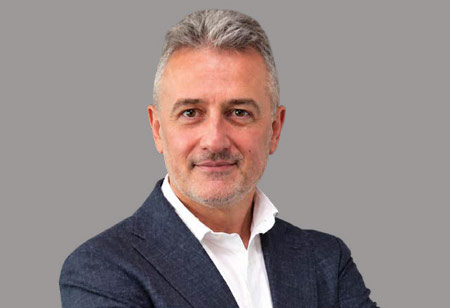
Barış Fındık
Barış Fındık leads the technology organisation and digital transformation agenda at Pegasus Airlines. His approach is grounded in a simple principle: technology creates value only when it improves a real business outcome. Under his leadership, Pegasus has continued to strengthen its digital foundations, scale artificial intelligence across customer and operational processes, and connect its teams with the global innovation ecosystem through Pegasus Innovation Lab in Silicon Valley.
Building Technology around the Airline, Not around IT
My career has given me the opportunity to work across different technology-intensive industries, each with its own pace, operating model and customer expectations. Aviation, however, brings these dimensions together in a particularly demanding way. It is a 24 hours seven days operation in which safety, resilience, cost discipline and customer experience must work in harmony. A technology decision can affect thousands of colleagues, millions of guests and a complex operational network.
This is why I do not see digital transformation as a collection of technology projects or a journey with a defined endpoint. It is a continuous business transformation enabled by technology. As technologies evolve, the role they play in transforming organisations also changes in scale and scope. Today, AI is expanding that role significantly, but the fundamental objective remains the same: enabling faster decisions, simpler journeys, more resilient operations and measurable improvements in performance.
At Pegasus, our ambition is to become one of the world’s leading airlines in the use of technology. This requires us not only to follow technological developments but also to translate them into capabilities that can create value at airline scale.
Advancing Digital Transformation through AI
The conversation around artificial intelligence has changed significantly. A few years ago, the focus was mainly on technical feasibility and individual productivity. Today, AI is becoming an operational capability embedded in the core processes of an airline.
For us, this does not mean that digital transformation has ended and a separate AI journey has begun. AI represents the next phase of that transformation—one that broadens what technology can achieve across the organisation and increases its strategic importance. Our journey therefore continues by building on the foundations we have established in data, governance, platforms and organisational capabilities.
Our priority today is execution. We focus on areas where AI can create measurable value, from operational decision support and maintenance intelligence to customer service and commercial processes.
Agentic AI is accelerating this evolution. While traditional AI assistants respond to requests, AI agents can work towards a goal, plan actions and manage defined parts of a workflow. AI is therefore evolving from a tool that supports a task into a digital colleague that can take responsibility for specific steps within a process.
The next chapter of AI in aviation will be defined by execution: how effectively we embed intelligence into real decisions, real workflows and real customer journeys.
Making Adoption Part of the Transformation
Technology is one of the key priorities on our senior leadership agenda, and adoption starts at the top. This visible leadership commitment helps create the shared direction and organisational ownership required for transformation to scale.
Technology does not create value simply because it has been implemented. It creates value when people understand it, trust it and incorporate it into the way they work. This makes adoption one of the most critical disciplines of digital transformation.
“AI is becoming an operational capability embedded in the core processes of an airline.”
At Pegasus, adoption is not a final communication stage at the end of a project. It begins with involving business teams early, understanding their needs and designing solutions together. It continues through training, experimentation, peer support and the measurement of actual usage and impact.
Our Technologists and Innovators communities play a central role in this model. Our Technologists lead the spread of new technologies across the organisation, make change visible and guide their colleagues as they take their first steps with greater confidence. Embedded across different business units, they connect technological opportunities with real operational needs and act as a bridge between our technology teams and the wider organisation.
Our Innovators community strengthens our culture of exploration. They identify problems worth solving, bring forward new ideas and help us test how emerging technologies can create value. Together, these communities create a multiplier effect: technology teams provide secure platforms, governance and expertise, while colleagues closest to the work identify opportunities and contribute to solutions. This shared ownership is essential for transformation at scale.
Connecting Global Innovation with Airline Operations
We established the Pegasus Innovation Lab in Silicon Valley to bring the global technology ecosystem closer to our business priorities. Its purpose is not simply to observe trends but to connect startups, universities and technology partners with real airline challenges.
Over the past two and a half years, the Lab has engaged with nearly 800 startups across our priority areas. Through a structured process, we identify relevant solutions, validate them with our business units and move the strongest opportunities into operational environments. Our academic collaborations also connect multidisciplinary talent and fresh thinking with practical challenges in areas such as artificial intelligence, customer loyalty and data-driven decision-making.
The pace of change requires us to continuously reconsider not only the technologies we use but also how we organise ourselves around them. For the technology organisation, this means continuing its own transformation, from a conventional service provider into a strategic business partner that combines strong engineering and operational capabilities with a clear understanding of business priorities.
As Pegasus, we are positioning ourselves for this environment by strengthening our digital foundations, developing our people and adapting our ways of working. Our vision is to be among the airlines that use technology most effectively worldwide. AI is opening a new phase in this journey, but our direction remains consistent: turning emerging technologies into reliable, scalable capabilities while evolving our organisation in line with the changing needs of our business and the world around us.
