


 Andrea Lackey, Vice President, Space
For more than 40 years, Iris Technology has focused on developing these critical electronic solutions for aerospace, defense, and tactical applications.
The company’s work centers on solving a specific challenge within highly complex systems: providing the electronics that allow instruments, sensors, and mission equipment to operate effectively in environments where reliability is essential.
As Vice President, Space at Iris Technology, Andrea Lackey leads the company’s space-focused initiatives, where the organization develops radiation-hardened control electronics designed for flight applications. Unlike companies that build complete spacecraft or payload instruments, Iris Technology focuses on the electronic systems that drive power, sense, control, and manage those instruments.
This position gives the company a unique role within the aerospace ecosystem. Iris Technology works alongside major defense and aerospace organizations by providing specialized capabilities that complement larger mission architectures rather than replacing them.
Filling the Critical Electronics Gap
A satellite or defense payload is made up of numerous components that must work together seamlessly. Engineers may define the required sensor, optical system, or instrument, but those systems also require electronics that regulate power, manage communication, and control performance. This is where Iris Technology contributes its expertise.
The company develops control electronics that are the power source, and connection between instruments, a payload computer, and the spacecraft bus. These systems help manage components such as cryocoolers and optical sensors, ensuring they receive the appropriate power and control signals needed for operation.
“The control electronics are referred to as the ‘bits’ of a satellite,” Lackey explains. “They are the puzzle piece.”
Power and data management are central to our mission. We recognize that whether deployed on the battlefield or operating in space, these systems require reliable power and precise control in harsh environments.
For example, many optical payloads require infrared sensors that must remain stable and accurately process data. While the sensor itself captures data, supporting electronics convert the data into a usable format. Iris Technology provides these interfaces and control systems that enable the larger mission architecture to migrate data effectively.
The company’s approach is based on understanding where customers need specialized expertise. Rather than competing with prime contractors, Iris Technology serves as a technology partner that helps organizations address complex engineering requirements.
Power, Communication, and Control for Harsh Environments
The company’s capabilities extend beyond space applications. Iris Technology also develops technologies for tactical environments, where power management and communication reliability directly impact operational effectiveness.
Across both space and defense applications, power management remains a central focus. Whether electronics are operating hundreds of miles above Earth or being carried by personnel in the field, they must deliver consistent performance despite challenging conditions.
In space systems, Iris Technology develops power management solutions that ensure payload instruments receive the power required to operate in high-radiation environments. In tactical settings, the company provides portable power solutions and accessories that extend power capabilities to other devices downstream, such as recharge capability, where traditional power sources may not be available.
“Power and data management are central to our mission. We recognize that whether deployed on the battlefield or operating in space, these systems require reliable power and precise control in harsh environments,” Lackey says. “This distinguishes us from the available, non-ruggedized, commercial products.”
For military users operating in remote environments, sustaining reliable communication can be a significant challenge. Iris Technology’s tactical operational energy infrastructure provides integrated power solutions for base, mobile, and dismounted missions, enabling personnel to generate and store energy, manage power across batteries and communications equipment, and distribute it where it is needed most.
Iris Technology’s Merlin® adapter provides a hold-up power interface between a tactical radio system and its battery, preserving radio operation during battery exchange. The adapter eliminates the communications interruption traditionally caused by removing a depleted battery, helping warfighters maintain command, control, and situational awareness in time-critical field operations.
The technology can also support additional equipment by intelligently routing available power to other devices carried in the field. Through these solutions, Iris Technology helps utilize existing power infrastructure and equipment to reduce the physical and logistical burden on the warfighter.
Supporting Space-Based Defense Capabilities
Beyond individual components, Iris Technology contributes to larger defense architectures designed to improve awareness and response capabilities. The company’s electronics are incorporated into optical payload systems used for missile warning, tracking, and related defense applications.
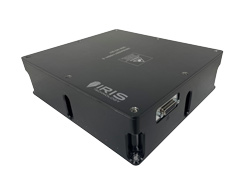 These missions require extremely precise systems. Optical sensors must detect and process information quickly while operating in demanding space environments. Electronics supporting these sensors must maintain performance while managing power, processing data, and communication between different parts of the system.
Iris Technology’s SotiraTM focal plane interface electronics play an important role in this process. These systems help relay sensor information before it moves through the larger architecture, allowing data to be handled efficiently. Depending on mission requirements, the company’s interface solutions can perform real-time processing, store information, or complete image corrections before passing data to other computing systems.
A key part of this capability is maintaining flexibility for different customers. Every prime contractor may have unique approaches to processing information, and Iris Technology works to protect those proprietary requirements while providing the underlying electronic foundation.
The company’s ability to remain technology-agnostic allows it to collaborate with multiple organizations while respecting their individual approaches and intellectual property.
Solving the Challenges of Cryogenic Systems in Space
One of Iris Technology’s specialized areas is the development of cryocooler control electronics for advanced optical payloads. These systems play an important role in maintaining the performance of infrared sensors used in space-based applications.
Infrared sensors generate heat during operation, and the surrounding space environment creates additional thermal challenges. To maintain accuracy, these sensors must remain within carefully controlled temperature ranges. Cryocoolers provide the necessary cooling, but operating them introduces another challenge to the system and image accuracy: vibration.
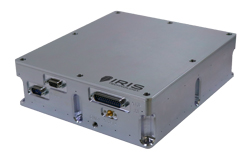 For optical systems involved in applications such as missile detection and tracking, even small amounts of movement can affect performance. An accurate image requires not only extreme cooling but also precise vibration control and management.
Iris Technology addresses this challenge by developing electronics that actively control cryocooler operation. The system detects when cooling is required, manages power delivery, and reduces vibration created during operation.
Lackey compares the role of these electronics to the supporting systems that allow a larger technology to perform effectively. The cryocooler provides the cooling function, but the surrounding electronics ensure that the complete system works together as intended.
The company’s ICE family of electronics reflects this approach by focusing on improved performance, reduced size, and cost considerations for cryogenic control electronics. Through continued engineering development, Iris Technology helps customers address the technical challenges associated with increasingly advanced space payloads.
Engineering Reliability through Testing
Developing electronics for space and military applications requires a level of reliability that goes beyond standard product development. Equipment must be designed, analyzed, tested, and validated for environments where repair or replacement may not be possible.
At Iris Technology, comprehensive analysis and testing is integrated throughout the engineering lifecycle. The company evaluates not only whether a system functions but also whether it can continue performing under the physical and environmental conditions it will encounter.
-
Our ICE CCEs, our SotiraTM focal plane electronics, and our other space control electronics are TRL 9 and flying and operating today.
Space electronics undergo qualification processes that evaluate resistance to electromagnetic interference, vibration during launch, and thermal conditions experienced in orbit. Thermal vacuum testing allows engineers to simulate the space environment and verify that systems continue operating under extreme conditions.
The company also considers long-term mission requirements. Customers need confidence that electronics supporting a satellite or payload can operate throughout missions that may last several years.
Lackey notes that Iris Technology’s space electronics have reached the highest level of operational readiness. “Our ICE CCEs, our SotiraTM focal plane electronics, and our other space control electronics are TRL 9 and flying and operating today,” she says.
Tactical electronics require a different approach because they operate in unpredictable field environments. Equipment used by military personnel may encounter dust, water, extreme temperatures, physical impact, and electromagnetic challenges.
Iris Technology conducts environmental testing designed around these realities. Equipment is evaluated through conditions such as moisture exposure, drop testing, and electromagnetic compatibility assessments to ensure it will perform when deployed.
Preparing for the Next Generation of Missions
The aerospace and defense sectors continue to evolve rapidly, creating new requirements for electronics providers. Iris Technology maintains a technology roadmap designed to keep pace with changing customer needs and emerging technologies.
The company regularly evaluates new components, monitors technology developments, and works with customers to understand future requirements. This approach allows Iris Technology to update existing products while developing new solutions for upcoming applications.
Future opportunities include emerging areas such as advanced space computing and data center technologies. Iris Technology is already exploring how its expertise in electronics, control systems, and power management can contribute to these evolving markets.
The company’s work also extends into new instrument applications. While cryocooler control remains a key capability, Iris Technology can support other payload requirements, including heater control electronics for systems where temperature stability is critical.
Maintaining close relationships with customers remains an important part of the company’s strategy. By working directly with mission developers and defense organizations, Iris Technology gains insight into challenges before they become larger engineering obstacles. This customer-focused approach has helped the company build long-term partnerships across the aerospace and defense industries.
Expanding Global Support for Defense and Space
As demand for defense and space capabilities continues to grow internationally, Iris Technology is expanding its presence beyond the United States. The company plans to establish operations in the Netherlands, creating opportunities to support European defense initiatives and strengthen relationships with international partners.
The expansion reflects a broader shift in the global aerospace landscape, where more countries are investing in advanced space and defense technologies. For Iris Technology, international growth is an opportunity to bring its specialized expertise to additional customers while continuing to support existing partnerships.
The company is also increasing its visibility within the industry through greater participation at space and tactical trade events. Historically, Iris Technology operated with a quieter presence, focusing primarily on engineering and customer relationships. Today, the organization is making a more deliberate effort to introduce its capabilities to a broader audience.
“We’re here to help them. We’re not here to take anyone out of business. We’re here to complement their technology, strategy, and mission success. We shoulder the electronics workload and they trust us to do what we already do really well,” Lackey says.
That philosophy defines Iris Technology’s position in the market. The company is not attempting to replace established aerospace and defense organizations. Instead, it provides specialized electronics expertise that helps mission partners focus on their larger objectives.
A Trusted Partner for Critical Electronics
From spacecraft payloads to tactical power management systems, Iris Technology continues to focus on the electronic technologies that allow complex missions to succeed. Its expertise in power management, control electronics, communication interfaces, and environmental qualification enables customers to address some of the most demanding engineering challenges.
The company’s role may often exist behind the scenes, but its contributions are essential to the performance of modern aerospace and defense systems. By combining over 4 decades of experience with a commitment to customer collaboration, Iris Technology continues to strengthen the electronic foundation behind critical missions.
Named Top Military And Space Grade Electronics Solutions for 2026, Iris Technology represents the type of specialized engineering partner required for the next generation of aerospace and defense programs. Through continued innovation, rigorous testing, and close collaboration with customers, the company remains focused on delivering dependable electronics that help advance mission capabilities across space and tactical environments.
What Matters in Military and Space Electronics Procurement
Military and space electronics are procured against a different failure equation than conventional electronics. A component can meet electrical requirements on paper yet become unusable once launch vibration, radiation exposure, thermal cycling and prolonged mission duty enter the design envelope. Procurement teams therefore need to look beyond nominal performance and examine how deeply qualification requirements are built into product architecture and manufacturing process.
Environmental qualification is one of the clearest dividing lines. Space electronics must tolerate radiation effects and electromagnetic interference while surviving the mechanical loads of launch and years without physical access. Tactical systems face another set of stresses, including water exposure, dust, drops and electromagnetic emissions that can compromise equipment use in the field. Buyers should examine whether qualification is treated as a final compliance exercise or as part of design validation from the beginning. Test evidence also matters. Thermal-vacuum testing and vibration testing, paired with EMI/EMC evaluation, should produce data that supports expected mission life and system-level integration under realistic environmental limits.
Interface design deserves equal scrutiny because many military and space electronics sit between larger subsystems rather than operate as stand-alone products. Power conversion and sensor interfacing can become integration bottlenecks when electrical characteristics or data handling are not aligned with the host platform. A strong evaluation should examine how much processing can occur at the interface, what functions must be handed off to another computer and whether the electronics can support proprietary system logic without exposing sensitive architecture. That last point is especially relevant when one supplier serves multiple prime contractors whose processing methods cannot be shared across programs.
“Iris Technology’s focal plane interface products can perform real-time edge processing and, in some configurations, non-uniformity correction before data reaches the space computer.”
Manufacturability can become a hidden schedule constraint after qualification work is complete. An electronics design that performs correctly but is difficult to assemble consistently can introduce rework or slow production as programs move beyond development. Buyers should examine repeatable assembly and whether test procedures can be reproduced across successive builds. The closer the manufacturing approach matches the qualified design, the lower the risk of introducing changes that trigger additional engineering review during production ramp-up.
Lifecycle support presents a different procurement risk. Defense and space programs often outlast the commercial availability of individual parts, leaving engineering teams exposed to component obsolescence or redesign work late in the program. Technology roadmaps and end-of-life monitoring therefore matter almost as much as initial performance. Executives should also assess whether the provider can adapt an existing electronics platform to different instruments or power architectures without forcing a clean-sheet design each time, particularly when mission requirements change after initial qualification.
Iris Technology develops radiation-hardened, flight-qualified control electronics for space payloads and power-management products for tactical use. Its cryocooler control electronics sense thermal demand and drive power to the cooler. Active vibration damping helps prevent cooler movement from interfering with optical performance. Its focal plane interface products can perform real-time edge processing and, in some configurations, non-uniformity correction before data reaches the space computer. The company also designs around customer-specific processing requirements while keeping prime-contractor intellectual property separated. For tactical programs, its Merlin adapters manage radio power during battery changes and support hot swapping without communication loss. Iris Technology is worth considering where buyers need qualified electronics that address both subsystem integration and mission-specific power or control demands.
...Read more
| Share this Article: |
Company
Iris Technology
Management
Andrea Lackey, Vice President, Space
Description
Iris Technology develops radiation-hardened space electronics, tactical power solutions, and communication technologies that enable critical aerospace and defense missions. With over 4 decades of expertise, the company delivers reliable control systems, interfaces, and engineering solutions for complex operational environments.
