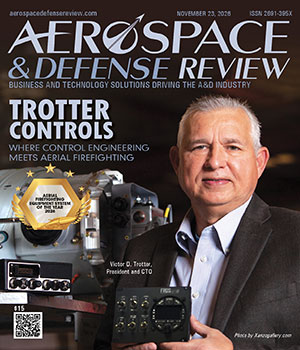
In aerial firefighting, releasing a large volume of retardant is only one part of the mission. Controlling how that payload is delivered during flight helps ensure consistent coverage over the target area. Trotter Controls combines decades of industrial automation and process-control expertise with aviation mission-equipment engineering to address that need. It develops equipment that balances performance, weight and reliability while meeting certification requirements across different aircraft and missions. Precise delivery of retardant depends on multiple variables, including tank level, aircraft speed, and G-forces. Trotter Controls applies control engineering to account for those variables, turning the fire gate from a mechanism that simply opens and closes into a system that manages fluid delivery throughout the drop. The Fort Worth, Texas-based company’s roots in aerial firefighting date to 1992, when President and CTO Victor D. Trotter, Dr. Robert L. Woods and the design teams at Spectra Technologies and Air Tractor collaborated to design the original constant-flow fire gate system for the purpose-built AT802F Air Tractor firefighting aircraft. Air Tractor’s founder, Leland Snow, took an interest in Victor and mentored him. Victor provided long-term engineering support and worldwide training for Air Tractor 1st generation firegate (FRDS GEN I) fleet, while also working on a cross-section of products, automation and robotic work-cells. After Spectra Technologies was sold in 2004, Trotter Controls was formed with a focus on robotics, automation, oil-field equipment, circuit-board design and other industrial applications, while becoming the OEM Air Tractor supplier for the FRDS GEN I control system. In 2006, it designed the 2nd generation FRDS GEN II and remains Air Tractor’s OEM provider for the all-electric FRDS GEN III.
Aviation
Whether it is a single jet or an entire fleet, private aviation offers exceptional freedom without the typical constraints of commercial travel. While the flight experience is seamless for passengers, finding the right crew to provide that experience can be challenging for operators. Even for a small team of pilots, flight attendants and technicians, sourcing talent, verifying credentials and coordinating schedules can quickly become overwhelming. That’s where JetPro Pilots comes in, streamlining the complexity of aviation staffing with precision and care. Founded 16 years ago by three pilots who saw a need for better service for both clients and crew, it was built on five core principles—simplicity, integrity, strong work ethic, people-first relationships and industry-leading technology. This foundation enables JetPro to support clients and crew with clarity, confidence and consistency, no matter how complex the flight requirements. Serving more than 500 clients across the country, including private aircraft owners and Fortune 100 companies, JetPro supports every type of operation with tailored crewing solutions. Through its nationwide network of over 3,000 vetted pilots, flight attendants and technicians, backed by 6,000+ pilot type ratings and more than 11 million flight hours—JetPro provides the depth, flexibility and readiness clients need to keep flying without compromise. “We don’t just staff aircraft. We simplify the entire process, making it seamless and stress-free for both crew and clients,” says Jason Wardwell, Chief Operating Officer & Partner. Streamlining Staffing with Technology JetPro’s proprietary apps, TripTrac and CrewTrac, serve as the digital backbone of its operations. These apps replace traditional paperwork with intuitive digital workflows for timesheets, expense reports and billing. TripTrac allows crew members to log workdays and upload receipts directly from their phones. With no markup on expenses, costs are billed transparently to clients. JetPro’s crew members are compensated promptly for the expenses they incur during a trip, often receiving reimbursement before their credit card statements are due. This quick turnaround supports smooth cash flow for crew and reduces financial stress, while also minimizing administrative burden for clients.

Aviation

When aircraft touch down in Guam, time is rarely on their side. Whether it is a military operation, a medevac flight, or a business jet on a technical stop, every moment counts. Guam may be remote, but its role in global aviation is anything but peripheral and no one embodies that reality more fully than Aviation Concepts. Since 2001, Aviation Concepts has grown beyond the role of a traditional Fixed Base Operator (FBO), establishing itself as a vital mission enabler in the Western Pacific region. Strategically located at the crossroads of Southeast Asia, Hawaii, and North America, the company delivers round-the-clock fueling and aviation ground services tailored for the world’s most demanding flight profiles. “Our location allows us to support aircraft on long-haul flights that require quick, efficient technical stops, whether for refueling, crew rest, or maintenance coordination,” says Yxel Espina, General Manager of Aviation Concepts. The Calm in Guam’s Operational Storm Guam’s remote location presents a range of logistical challenges that can escalate rapidly; including extended lead times for parts and fuel, cross-border regulatory complexities, narrow coordination windows, and frequently unpredictable flight schedules. These factors have the potential to disrupt even the most meticulously planned missions—unless supported by a partner with the foresight to anticipate and address such issues proactively. This is where Aviation Concepts steps in. Rather than react, the team anticipates. Around-the-clock availability, proactive communication across time zones, and commitment to execution allows it to provide seamless service even under intense operational pressure. Every Jet A-1 fueling is handled by certified professionals who are trained to meet the highest safety and efficiency standards. Whether it is a rapid-turn refuel or extended ground handling support, the tempo of service always matches the urgency of the mission.
Space Tech

Growing Space Manufacturing Sector Expands Opportunities for Innovation
Shelli Brunswick, Chief Operating Officer at Space Foundation
MRO

Large Hub, Big Data
Matthew Robb, Senior Vice President, Technical Operations, Denver International Airport
Avionics

Acknowledging and Overcoming The Leadership Know-do Gap
Jeff Charron, Director of Organizational Effectiveness, Culture, and Change, Pratt & Whitney
MRO

The Strategic Imperative of Candidate-Centric Hiring: Why Candidate Experience Matters and How It Works Across All Roles
Kevin Cure, Head of Talent Acquisition, Republic Airways
A&D Suppliers & Distributors

Navigating the Future: Defining Trust in AI for Aviation Systems
James Grimsley, Executive Director at Advanced Technology Initiatives, Choctaw Nation of Oklahoma and Karen DiMeo, CEO, AERODiMEO

IN MY OPINION
A&D Staffing
Strategies for Fortifying Cyber Self-Defense
Kent E., Chief Information Officer, Doña Ana County

LAST WORD
A&D Staffing
Modernizing Airports to Ensure Business Efficiency
Maurice Jenkins, Chief Innovation Officer, Miami International Airport
IN FOCUS
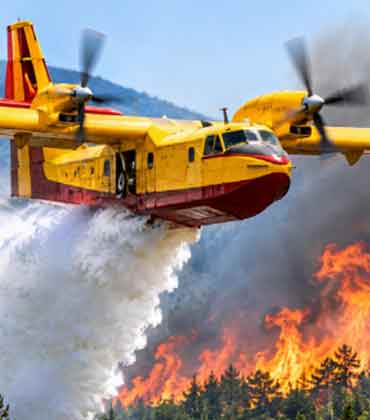
Firefighting Aircraft Systems: Integrating Advanced Aviation Technologies
Aerial firefighting equipment enhances aircraft capabilities through advanced technologies, reliable system integration and safety measures, supporting effective wildfire management and emergency response operations.

Business Aviation: A Strategic Advantage for Growth
Business aviation provides greater travel comfort, strengthens business relationships, and saves time.
EDITORIAL
Precision Engineering Securing Aerial Missions and Critical Infrastructure
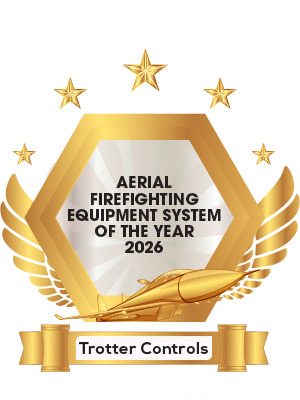
Trotter Controls receives recognition as the Aerial Firefighting Equipment System of the Year 2026 for turning firegate deployment into a closed-loop control issue. With several decades of experience in automation of industrial processes, the company from Fort Worth has been supplying the control system and the gate to over 700 aircraft. Its constant flow system moves the gate in response to the tank level, airspeed and G-force, resulting in about 46 percent more ground coverage compared to a fixed angle system.
Kent E., Chief Information Officer for Doña Ana County, notes that convenient features like saved passwords and bypassed multi-factor authentication increase the area of attack. He recommends the use of longer random passphrases, device encryption, biometric locks when possible and prepared safety phrases to protect from deepfake attacks. Maurice Jenkins, Chief Innovation Officer at Miami International Airport, says that the biometric self-boarding service, which has been used at all international boarding gates since 2019 after the pilot project, not only speeds up boarding but also improves identity validation by comparing faces, while the next will be the self-service bag-drop to verify passengers’ identities.
Together these efforts show that durable advantage stems from engineering depth, disciplined risk reduction and measured adoption of new tools. Explore the edition further to review the full technical and operational details presented by each contributor.
