


 John Bergeron, CEO
Attalon is making significant investments in both areas. By bringing together precision optics, optical coatings, laser technologies, and manufacturing expertise, the company is expanding its ability to support urgent mission requirements while helping customers move from advanced technology concepts to reliable, field-ready systems.
The company’s approach begins with understanding the mission and then developing the technology required to support it. Rather than focusing only on individual components, Attalon looks at the complete optical or laser system, helping customers address complex challenges through an integrated set of capabilities.
According to John Bergeron, CEO of Attalon, this ability to look beyond individual parts is one of the company’s key differentiators. “We look forward to taking great ideas and innovations and turning them into deployable assets to support the mission, support the warfighter, and ultimately defend the country,” says Bergeron.
Engineering Solutions around Mission Requirements
Defense and aerospace customers increasingly require optical systems that deliver higher accuracy, greater durability, and improved performance while operating in demanding environments. Attalon works closely with customers to translate those requirements into practical manufacturing and engineering solutions.
 The company’s capabilities extend across the entire optical process, from selecting and processing materials to producing finished optics and applying advanced coatings. This allows Attalon to support applications ranging from sensing and imaging systems to advanced aerospace platforms.
Attalon’s optical experience includes producing complex components for major scientific and aerospace programs, including polishing large optical segments and manufacturing specialized components for space-based applications. That background gives the company the expertise needed to handle challenging requirements where precision and consistency are critical.
The same philosophy applies to Attalon’s laser capabilities. The company supports laser systems from individual components through integrated solutions, helping customers move technologies beyond prototypes and into operational environments. As directed energy systems continue to evolve, the ability to maintain and support deployed platforms is becoming just as important as developing the technology itself.
Investing Ahead of Demand
Meeting future defense requirements requires more than technical expertise; it requires investment in manufacturing capacity. Attalon is expanding its infrastructure to support growing demand and strengthen the domestic supply chain.
One example is the company’s investment in a new precision coatings facility in Pennsylvania. The facility is designed to expand Attalon’s ability to support advanced defense applications, including missile systems, radomes, hypersonic technologies, and electromagnetic and radio frequency solutions.
Quality remains central to that effort. Attalon incorporates quality controls throughout the manufacturing process instead of relying only on final inspection. Through advanced manufacturing techniques, process verification, and measurement capabilities, the company works to ensure that every stage of production supports the required performance standards.
The investment reflects Attalon’s broader strategy of building capacity before demand reaches critical levels. The company is focused on ensuring that its manufacturing capabilities can support customers as defense programs move toward increased production and faster deployment.
-
We look forward to taking great ideas and innovations and turning them into deployable assets to support the mission, support the warfighter, and ultimately defend the country.
Quality remains central to that effort. Attalon incorporates quality controls throughout the manufacturing process instead of relying only on final inspection. Through advanced manufacturing techniques, process verification, and measurement capabilities, the company works to ensure that every stage of production supports the required performance standards.
Combining Technology with Talent
Behind Attalon’s growing capabilities is a focus on developing the right technical talent. The company recognizes that advanced manufacturing requires experienced engineers, skilled technicians, and teams capable of solving difficult problems quickly.
 To support that goal, Attalon places engineering resources close to manufacturing operations. This approach allows teams to address challenges immediately, improve collaboration, and maintain alignment between customer requirements and production realities.
The company’s culture emphasizes transparency and responsiveness. By working closely with customers and partners, Attalon aims to identify challenges early and develop solutions that support mission objectives.
Building the Future of Defense Manufacturing
As defense priorities continue to evolve, Attalon is focused on strengthening the connection between innovation, production, and mission capability. The company is expanding its footprint, investing in domestic manufacturing, and developing solutions that help customers move critical technologies into the field faster.
Through its combination of precision engineering, advanced manufacturing, and mission-focused partnerships, Attalon aims to serve as a trusted technology partner for defense and aerospace organizations. Its focus remains clear: transforming complex ideas into reliable capabilities that support the warfighter.
System-Level Precision for Warfighter Readiness
Defense optical systems are being procured under a tighter equation than component performance alone. Tolerance demands keep rising while programs face pressure to move from development into repeatable production faster. Weight constraints, aperture size, coating behavior and production rate can interact in ways that make late changes expensive. A design may meet specification yet still create trouble when coating behavior shifts at volume or an interface is interpreted differently by separate suppliers. Procurement teams should examine how far a vendor can carry a requirement through the build rather than treating each optical element as an isolated purchase.
Integration depth becomes especially important when an optical chain crosses material selection, shaping, coating and packaging. Every transfer between specialists creates another interpretation of the system requirement and another point where schedule or fit can drift. A capable supplier should be able to work backward from the mission and translate system demands into a manufacturable form factor. Tolerance targets then have to survive subsequent processing. That matters for sensing apertures and larger telescope assemblies alike, where an optic cannot be judged apart from how it is coated and mounted inside the assembly. Procurement reviews should also probe whether optical engineering and manufacturing teams share the same requirement baseline, since late reinterpretation can erase time gained through faster fabrication. The buying question is less about the breadth of a catalog than about how much technical continuity survives between requirement definition and finished subsystem.
Production volume can expose process drift that a prototype run never surfaces. Final inspection cannot compensate for variation that entered during surfacing or coating, particularly on large apertures or geometries that are difficult to measure. In-process metrology, repeatable surfacing methods, controlled coating processes and documented verification give buyers a clearer view of whether precision can survive production pressure. Capacity belongs inside the same discussion. Extra floor space has little value if the added output is not backed by the tooling and engineering depth needed to preserve tolerance. Domestic manufacturing also deserves scrutiny where program schedules depend on predictable access to specialized materials or processes.
“Attalon’s vertical integration spans precision optics, coatings, laser subsystems and beam director subsystems, reducing the handoffs that can separate system requirements from component execution.”
Directed energy creates another buying test. A laser system that performs during acceptance can still impose a heavy maintenance burden once deployed. Fielded systems benefit when subsystem design anticipates replacement and repair rather than treating sustainment as an afterthought. Buyers should look for architectures that can isolate a failed element and return the system to service without importing highly specialized factory work into the field. That same discipline affects the move from demonstration hardware to deployable equipment. Field reliability becomes a serviceability question once laser hardware leaves the factory. Packaging and service access can determine how quickly a deployed system returns to use.
Against those pressures, Attalon merits consideration as a premier choice for defense precision optical and warfighter programs. Its vertical integration spans precision optics, coatings, laser subsystems and beam director subsystems, reducing the handoffs that can separate system requirements from component execution. It also combines in-house optical manufacturing and metrology with beam director and directed energy capabilities, while expanding U.S. precision coatings capacity. That mix matters when programs need tighter tolerances at production volume and a clearer path from subsystem integration to field sustainment. For buyers prioritizing system continuity over fragmented sourcing, Attalon presents a focused fit.
...Read more
Defense Precision Optical and Warfighter Solutions Info
Q1
What Are Defense Precision Optical and Warfighter Solutions?
Defense Precision Optical and Warfighter Solutions include specialized optical, laser, coating and related technologies engineered for demanding defense applications. These capabilities can support targeting, imaging, sensing, directed energy and other mission-critical systems operating across air, space and ground environments. Precision matters because optical components must maintain performance despite thermal, mechanical and environmental stresses. Solutions may range from individual optical components and coatings to integrated subsystems designed around specific performance, reliability and integration requirements.
Q2
How Does Attalon Support Mission-Critical Defense and Optical Systems?
Attalon develops Defense Precision Optical and Warfighter Solutions across three core areas: directed energy and advanced lasers, precision optics and precision coatings. Its technologies support precision targeting, advanced imaging, secure communication and directed energy applications. The company produces laser and beam director subsystems, telescopes and optical assemblies, optics and windows, thin-film coatings and advanced optical materials. These capabilities are supported by U.S.-based engineering and manufacturing operations designed to address demanding performance and integration requirements across defense platforms.
Q3
Why Are Precision Optics Important in Demanding Defense Environments?
Optical components used in defense systems may encounter temperature changes, mechanical loads, radiation, high velocities and abrasive environments. Defense Precision Optical and Warfighter Solutions must therefore balance optical performance with the conditions a system will experience in operation. Material selection, surface quality, dimensional stability and coatings can all influence whether an optic performs as intended. For windows and other components, designers may also need to balance spectral requirements against thermal resistance, erosion resistance and survivability at different operating speeds.
Q4
What Should Defense Programs Consider When Evaluating Precision Optical Solutions?
Defense programs should consider whether Defense Precision Optical and Warfighter Solutions are engineered around the requirements of the complete system rather than a single component specification. Relevant factors can include spectral performance, thermal stability, mechanical durability, material selection and integration requirements. Production readiness also matters when a technology needs to move beyond a prototype. Manufacturing consistency, testing capabilities and the ability to support increasing production volumes can therefore become important alongside the optical or technical performance of the solution itself.
Q5
How Does Attalon Combine Precision Optics With Directed Energy Capabilities?
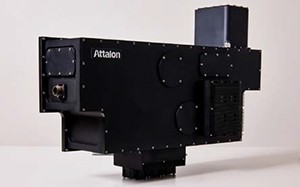
Attalon brings Defense Precision Optical and Warfighter Solutions together through vertically integrated optical, coating and laser capabilities. Its Valaris family provides beam-combined high-energy laser subsystems spanning multiple architectures and power levels. The company also develops beam directors designed for precision pointing, tracking and beam delivery in demanding operational environments. Alongside these systems, Attalon produces precision optics, optical windows and specialized coatings, allowing different enabling technologies to support advanced defense systems from components through integrated subsystems.
Q6
How Do Advanced Coatings Support Optical Performance and Survivability?
Coatings can determine how effectively optical components transmit, reflect or withstand exposure to challenging operating conditions. Defense Precision Optical and Warfighter Solutions may use specialized coatings to improve spectral performance while protecting surfaces against abrasion, erosion, corrosion, rain, sand and salt fog. Other patterned coatings can provide electromagnetic interference shielding while preserving optical transmission. Matching coating materials and designs to the intended environment helps optical and sensing systems maintain required performance while meeting the durability demands associated with defense applications.
| Share this Article: |
Company
Attalon
Management
John Bergeron, CEO
Description
Attalon delivers advanced precision optics, optical coatings, and laser solutions for defense and aerospace missions. Through integrated engineering, manufacturing expertise, and strategic investments, the company helps customers develop reliable, field-ready technologies that strengthen warfighter capabilities and support evolving mission requirements.
