THANK YOU FOR SUBSCRIBING

Aerospace and Defense Review Weekly Brief
Be first to read the latest tech news, Industry Leader's Insights, and CIO interviews of medium and large enterprises exclusively from Aerospace and Defense Review
![Embraer [BVMF: EMBJ3]: Keeping Latin American Fleets Mission-Ready](https://www.aerospacedefensereview.com/uploaded_images/6-kqzae.jpg "Embraer [BVMF: EMBJ3]: Keeping Latin American Fleets Mission-Ready")
For airlines, business aviation operators and defense organizations across Latin America, keeping aircraft available for service is essential to operational performance. Every hour an aircraft spends on the ground affects schedules, passenger experience, mission readiness and operating economics. In a region defined by vast distances, diverse operating environments and varying levels of maintenance infrastructure, dependable support has become as important as aircraft performance itself. Maintenance, repair and overhaul services now extend beyond technical execution. Operators need support partners that can anticipate issues, coordinate services across locations and minimize unplanned downtime. As an aerospace company with operations spanning commercial aviation, executive aviation, defense and aftermarket services, Embraer has built an integrated support model designed around those realities. The company's Services & Support business connects engineering, manufacturing and maintenance capabilities to help operators keep aircraft in service longer and manage costs more predictably. From Aircraft Design to Lifecycle Support Embraer's role extends beyond aircraft manufacturing. The company designs, produces and supports commercial aircraft, executive jets and defense platforms, including the E-Jets and E2 families, Phenom and Praetor jets, and the A-29 Super Tucano and KC-390 Millennium. Through its Services & Support business, Embraer provides maintenance, engineering and technical assistance across these platforms throughout their operational lifecycle. That breadth gives Embraer direct visibility into the operational challenges operators face throughout an aircraft's lifecycle. Engineering teams, manufacturing operations and support organizations work from the same source of technical knowledge, allowing maintenance procedures and service programs to reflect insights gathered from aircraft operating in real-world conditions.
![Embraer [BVMF: EMBJ3]: Keeping Latin American Fleets Mission-Ready](https://www.aerospacedefensereview.com/newstransfer/upload/7-zc9jr-.jpg "Embraer [BVMF: EMBJ3]: Keeping Latin American Fleets Mission-Ready")
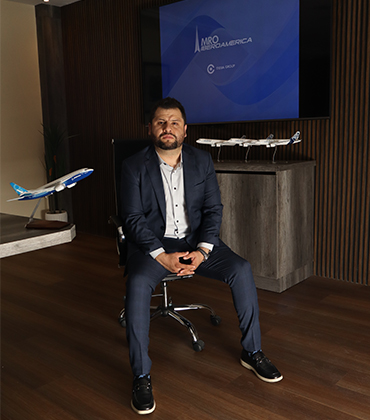
What challenges arise from fragmented aircraft maintenance across multiple vendors today? Aircraft maintenance has long been defined by fragmentation. Airlines often coordinate multiple vendors across maintenance, paint, and interior refurbishment, creating misaligned schedules, extended downtimes, and operational inefficiencies that ripple across entire fleets. The challenge is not simply technical execution, but synchronization. MRO Iberoamérica was built to solve that problem. Positioned as an integrated MRO system rather than a conventional service provider, the organization brings base maintenance, heavy checks, painting, and interior refurbishment into a single operational framework. The objective is not just capability expansion, but coordination and control—reducing downtime by aligning every stage of the maintenance cycle under a single structure. This approach redefines the role of an MRO from a transactional vendor to an operational partner. By eliminating the disconnect between services, MRO Iberoamérica enables airlines to move from reactive scheduling to predictable execution. The company’s origins, while shaped during a volatile period for aviation, are secondary to the model it has built. What began as a focused effort to establish high-quality maintenance capabilities in Mexico has evolved into a structured system designed to address one of the industry’s most persistent inefficiencies: fragmented maintenance workflows..
MRO
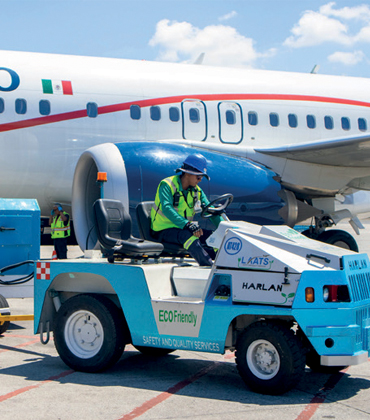
Operating within Guatemala’s infrastructure-constrained aviation environment, LAATS has developed an operational model centered on adaptability, coordination and disciplined execution. Supporting operations at La Aurora and Mundo Maya International Airports for over 25 years, the company has transformed those constraints into a foundation for safety, efficiency and operational reliability. A leading ground service provider, LAATS integrates multiple airport services—from ramp handling and passenger services to line maintenance and FBO operations—within one operational structure, improving responsiveness, delay recovery coordination and overall safety performance. “Our operational culture is built on accountability and situational awareness, and that’s what sets us apart. We execute procedures with a complete understanding of how each decision affects safety, airline performance and the passenger experience,” says Zintia Tobar, CFO and commercial manager. LAATS remains 100 percent Guatemalan-owned while competing against multinational handlers across the region. American Airlines, Copa Airlines and Aeromexico have each recognized the company with Best Station awards tied to turnaround performance and reliability. Coordinated Ground Operations LAATS operates as an operational partner rather than a conventional service provider. It obtained ISAGO certification in 2011, years before it became common across Central America. Today, its operation follows procedures aligned with ISAGO, IATA AHM, IGOM and airline-specific requirements.
A&D Manufacturing
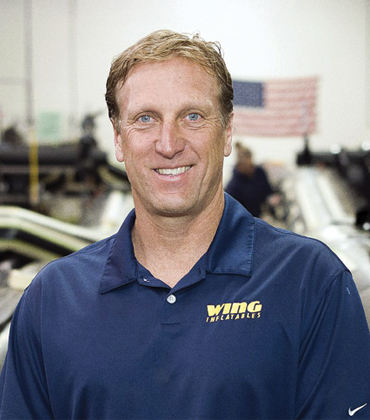
In mission-critical operations, inflatable boats are often a crucial piece of equipment. But these are typically designed to match distinct specifications, not for a spectrum of demands. Closing this gap requires a mindset that focuses on the larger picture. The Wing Group, and its companies Wing Inflatables, Henshaw Inflatables, Patten Company, Fabtek Industries and Mustang Survival, put this philosophy into practice. A global provider of inflatable boats, life rafts, dry suits, technical apparel and survival systems, it works closely with boat builders, OEMs and operators, always asking in-depth questions about real-world use. Every project is guided with the goal of improving outcomes while strengthening the internal capabilities of clients. “Our only competition is ourselves, and progress is measured by improving on our last effort,” says Andrew Branagh, CEO. The Wing Group caters to organizations across the recreational, commercial and defense industries. A Culture of Responsibility and Solutions Employees at The Wing Group are encouraged to move beyond the boundaries of their job descriptions, viewing challenges as opportunities to make a meaningful impact. Accountability and collaboration guide problem-solving. Clients value this approach because every interaction contributes to shared progress that ultimately defines success. This mindset shapes a culture that demands transparency at every level. Their culture acknowledges mistakes, offers apologies when necessary and takes corrective actions to prevent them from happening again. The company embodies the widely recognized principle of failing forward, utilizing setbacks as opportunities to learn, adapt and improve; thereby helping the organization grow stronger with each challenge. Innovation Rooted in Materials and Expertise Success at The Wing Group is measured not by comparison with others, but by progress over its past performance. Since 2014, the Wing Inflatable primary boat fabric, in partnership with Cooley, has undergone five generations of advancement. Every stage of development has been in close collaboration with weavers to produce threads that are lighter and more durable, assisted by protective coverings that remain resistant to ultraviolet light and harsh environments. With every iteration, the team resists complacency, pushing the limits of material science to provide unmatched durability. Engineering follows the same persistent approach, with a focus on practical performance and outcomes that protect people and equipment. Despite the inherent challenges associated with the imprecise shaping of inflatable structures, the company has consistently turned advances in materials into solutions that demonstrate reliability in critical conditions.
A&D Consulting

Taking a Leading Role in Future of Advanced Air Mobility
David Stepanek, Executive Vice President, and Chief Transformation Officer, Bristow Group [NYSE: VTOL]
MRO

Airports: Technology at the Service of Passengers
Fabrício Rasteiro, IT Director, Fraport Brasil - Porto Alegre
Defense Tech

Defense Aviation in Brazil
Marcelo Guerrante, Chief Operating Officer, Helisul Aviacao
A&D Suppliers & Distributors

Airport Management Innovations: Navigating Challenges Effectively
Abe Weber, Airport Director, Appleton International Airport
Defense Intelligence

Navigating Quertaros Aerospace and Defense Frontier: Innovations in Aviation, Defense, and Program Management
Sergio Aceves Gallegos, Engineering Program Manager, BOMBARDIER

IN MY OPINION
A&D Logistics
The Past, Present and Future of Airline Flight Training Departments
Lance Lau, Director Of Training, CommutAir dba United Express
LAST WORD
A&D Security
Reliability Security and the Future of Airport Information Systems
Matthew Babich, Assistant Director of Information Systems, Chicago Department of Aviation (CDA), O’Hare & Midway International Airports
IN FOCUS
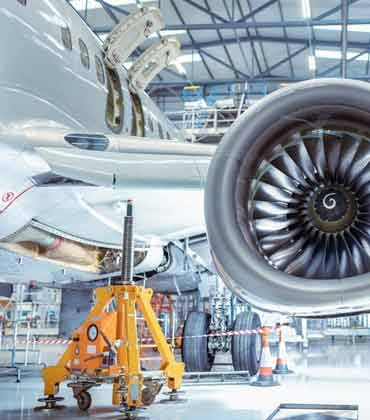
Operational Excellence in Latin America: The Role of Aircraft Maintenance Services
Aircraft maintenance and repair services in Latin America support fleet reliability, enhance operational safety, improve cost efficiency, and strengthen regional aviation infrastructure.
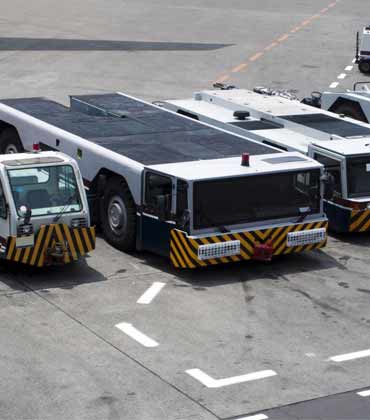
Latin America's Aviation Ground Handling: Ensuring Safety and Efficiency
Aviation ground handling services in Latin America support efficient aircraft turnaround, passenger facilitation, cargo flow, and safety within diverse and evolving airport environments.
EDITORIAL
Advancing Integrated Aviation Services Across Latin America
Latin America’s aviation sector is evolving through the integration of maintenance, reliability, ground-handling efficiency and lifecycle support systems. As fleet utilisation increases and complexity grows, airlines are prioritising partners that deliver consistency, predictability and system-level coordination across the aviation value chain. This edition of Aerospace & Defense Review LATAM highlights organizations and leaders shaping that transition.
At the center of this issue, Embraer is recognized as the Top MRO Services in LATAM 2026. The company strengthens fleet readiness across commercial, executive and defence aviation through an integrated Services & Support model connecting engineering, manufacturing and maintenance capabilities. By combining technical expertise with regional service infrastructure across Latin America, Embraer enables operators to improve aircraft availability, reduce downtime and manage lifecycle performance with greater predictability.
MRO Iberoamérica is recognized as the Aircraft Maintenance and Repair Services of the Year IN LATIN AMERICA 2026. The company operates an integrated maintenance system that brings base maintenance, heavy checks, painting and interior refurbishment into a unified production structure, reducing fragmentation and improving coordination across aircraft turnaround cycles. LAATS is recognized as the Top Aviation Ground Handling Service in Latin America 2026. Operating for more than 25 years, it delivers integrated ramp handling, passenger services, cargo support and FBO operations through a centralized model focused on safety, coordination and execution efficiency.
Leadership perspectives featured in this edition add operational and technological context. Matthew Babich, Assistant Director of Information Systems at the Chicago Department of Aviation (CDA) - O'Hare & Midway International Airports, highlights resilient airport IT infrastructure, focusing on system redundancy, cybersecurity and digital interoperability to ensure uninterrupted airport operations in complex environments. Lance Lau, Director of Training at CommutAir dba United Express, explores airline training systems, emphasizing structured instruction, standard operating procedures and continuous learning in developing competent flight crews.
Together, these perspectives reflect an aviation ecosystem where maintenance, ground operations, infrastructure and training are increasingly interconnected to support safer and more resilient systems across Latin America.
